Summary:
If you manage a building in Queens, you already know the sound. That low-grade grinding hum coming through the wall at 2 a.m. The tenant complaint that lands in your inbox before you’ve had your coffee. The repair call that fixes it for three weeks before the noise comes back.
Most building managers assume that’s just how PTAC units work. They don’t. The Ice Air RSZ Series was built to prove that — and we’ve been installing it across Queens buildings for exactly the kind of owners and managers who are done tolerating the status quo. Here’s what you should know.
What Is the Ice Air RSZ Series and Who Is It Built For?
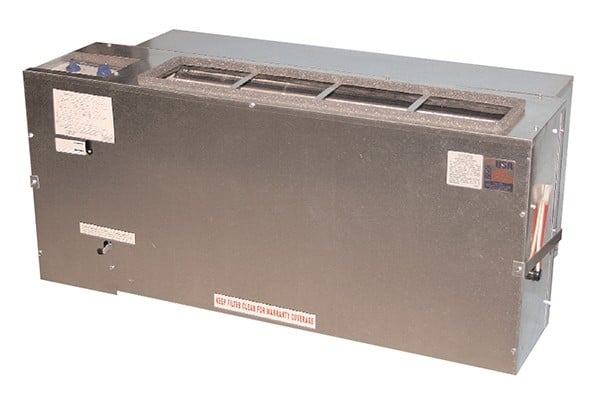
The RSZ Series is a replacement PTAC line from Ice Air — a New York-based manufacturer with over 40 years of experience building climate control systems specifically for NYC’s multi-family housing market. The RSZ isn’t a general-purpose unit. It was designed from the ground up as a high-efficiency, drop-in replacement for legacy RM Series PTACs from brands that no longer exist: Cool Heat, ZoneAire, Islandaire RM, Retroaire, Embassy, and TPI, among others.
If your building is running any of those older units, you already know the problem. Parts are hard to find, repairs are increasingly unreliable, and the units themselves are simply aging out. The RSZ was built to step in where those brands left off — without requiring you to touch the walls.
Why Are So Many Queens Buildings Still Running Discontinued PTAC Brands?
Queens has an enormous stock of pre-war and mid-century apartment buildings — the kind built between the 1940s and 1980s across Astoria, Sunnyside, Woodside, Jackson Heights, and Ridgewood. These buildings weren’t designed for central HVAC. Retrofitting ductwork into a six-story walk-up in Woodside isn’t just expensive — in most cases, it’s structurally impractical.
So PTACs became the default, and they’ve stayed that way for decades. The brands that supplied those original units — Cool Heat, ZoneAire, Retroaire — are gone. But the wall sleeves they left behind are still there, and so are the units themselves, grinding away in apartments across the borough.
Building managers have been keeping them alive through sheer persistence: ordering hard-to-find parts, calling in repair after repair, hoping each fix holds through another summer. At some point, that math stops working. When a unit is old enough that technicians are essentially improvising repairs, and the noise complaints from tenants keep coming, the cost of maintaining the old unit — in money, time, and tenant goodwill — starts to exceed the cost of replacing it.
That’s the moment the RSZ Series becomes the obvious answer. We built it to fit directly into the sleeves left by those legacy units. No demolition, no drywall work, no extended tenant displacement. The old unit comes out, the RSZ goes in, and the building moves forward.
For a Queens building manager coordinating access across multiple floors and units, that matters enormously. Getting contractors in and out of a busy residential building is already a logistical challenge — the last thing you need is a replacement process that turns into a renovation.
How Quiet Is the RSZ Series Compared to an Aging PTAC?
This is the question we hear most often, and it’s the right one to ask. A bedroom PTAC should operate somewhere between 35 and 45 decibels — roughly the ambient noise level of a quiet room. Hotel-grade standards typically cap PTAC noise at 55 decibels.
When a unit climbs above that threshold, sleep gets disrupted, tenants get frustrated, and complaints start stacking up. We’ve seen units running at 75 decibels or higher — that’s the noise level of a coffee grinder. In a dense Queens apartment building where walls are shared and sound carries, one unit operating at that level can affect multiple tenants, not just the one in the room where it’s installed.
The RSZ Series uses an advanced tangential indoor blower designed to deliver balanced airflow with significantly less mechanical noise than older-generation units. The entire PTAC line is engineered for whisper-quiet sound levels, grounded in real engineering choices: the blower design, the component tolerances, and the way the unit manages airflow all contribute to a noticeably quieter operating profile.
This matters in Queens beyond simple comfort. Some properties in the borough — particularly those in noise-sensitive zones carrying what the city calls an “e-designation” — are required to meet specific sound transfer standards. Our SoundShield project in Richmond Hill, Queens involved 444 PTACs installed across a 117-apartment building to meet exactly those requirements. Noise compliance in NYC isn’t always optional.
For buildings without a formal noise designation, the practical benefit is the same: fewer tenant complaints, fewer service calls chasing phantom rattles, and a quieter building overall. That’s a quality-of-life improvement for residents and a management improvement for owners.
Energy Efficiency, Local Law 97, and the Real Cost of an Aging PTAC
Noise is the most visible problem with an aging PTAC. Energy waste is the quieter one — and in Queens, it’s increasingly a financial and legal issue, not just an operational one.
NYC’s Local Law 97 requires most buildings over 25,000 square feet to meet greenhouse gas emissions limits, with fines of $268 per metric ton of CO₂ over the cap. The first compliance period began in 2024. Approximately 63% of covered buildings will be impacted by the stricter limits that take effect in 2030.
For building owners managing large multi-family properties in Queens, that’s not a distant concern — it’s already here.
Can Replacing PTAC Units Actually Help With Local Law 97 Compliance?
Yes — and it’s one of the most practical, least disruptive steps a Queens building owner can take. Aging PTAC units lose efficiency over time. Worn compressors, dirty coils, and refrigerant issues force units to work harder and consume more electricity to deliver the same output. Across a building with dozens of units, that inefficiency compounds into real emissions and real energy costs.
The RSZ Series was designed from the ground up for ultra-high efficiency and meets LEED criteria — the same green building standards used to certify sustainable commercial construction. Replacing a fleet of aging, inefficient units with RSZ Series PTACs directly reduces a building’s energy consumption and greenhouse gas output. That reduction counts toward LL97 compliance.
This isn’t a workaround or a technicality. It’s how the law is intended to work: incentivize building owners to upgrade inefficient systems. PTAC replacement is one of the most cost-effective ways to move the needle, particularly in older Queens buildings where the units themselves are the primary source of heating and cooling energy use.
Queens’ urban heat island effect makes this even more relevant. Summer temperatures in the borough routinely run several degrees higher than surrounding suburban areas, which means PTAC units work harder and longer here than they would almost anywhere else in the region. An inefficient unit in Jackson Heights or Flushing during a July heat wave isn’t just uncomfortable — it’s drawing more power and generating more emissions than the same unit would in a less dense environment.
Upgrading to a high-efficiency replacement isn’t just a regulatory move. It’s the practical response to the climate conditions Queens buildings actually face.
When Does It Make More Sense to Replace a PTAC Than to Keep Repairing It?
This is the question building managers wrestle with more than any other, and it deserves a straight answer rather than a sales pitch.
Repair makes sense when the unit is relatively young, the problem is isolated and clearly diagnosed, and the fix is expected to hold. A single component failure on a well-maintained unit is a repair job. That’s not a complicated call.
Replacement starts making more sense when the repair history tells a different story. If a unit has needed multiple service calls over the past two years without a lasting resolution, that’s a signal. If the parts required are difficult to source because the brand is discontinued, that’s a signal. If the unit is generating tenant noise complaints that don’t go away after service, that’s a signal.
And if the unit is old enough that its energy consumption is meaningfully higher than a modern replacement, the operating cost difference starts to close the gap on the upfront cost of a new unit faster than most owners expect.
We’ve been doing this work in Queens for over 50 years. We’ve seen every version of this calculation play out across every type of building the borough has. Our honest answer is that we’ll tell you which one makes sense for your situation — and if the repair is the right call, we’ll say so. We’re not in the business of recommending replacements that aren’t warranted.
What we can say about the RSZ specifically is that for buildings running discontinued legacy brands, the repair-or-replace question often answers itself. When parts aren’t available and the manufacturer no longer exists, the only real path forward is a replacement unit that fits the existing infrastructure. The RSZ was built for exactly that situation — and it comes with a one-year guarantee on all work, so you’re not taking a leap of faith.
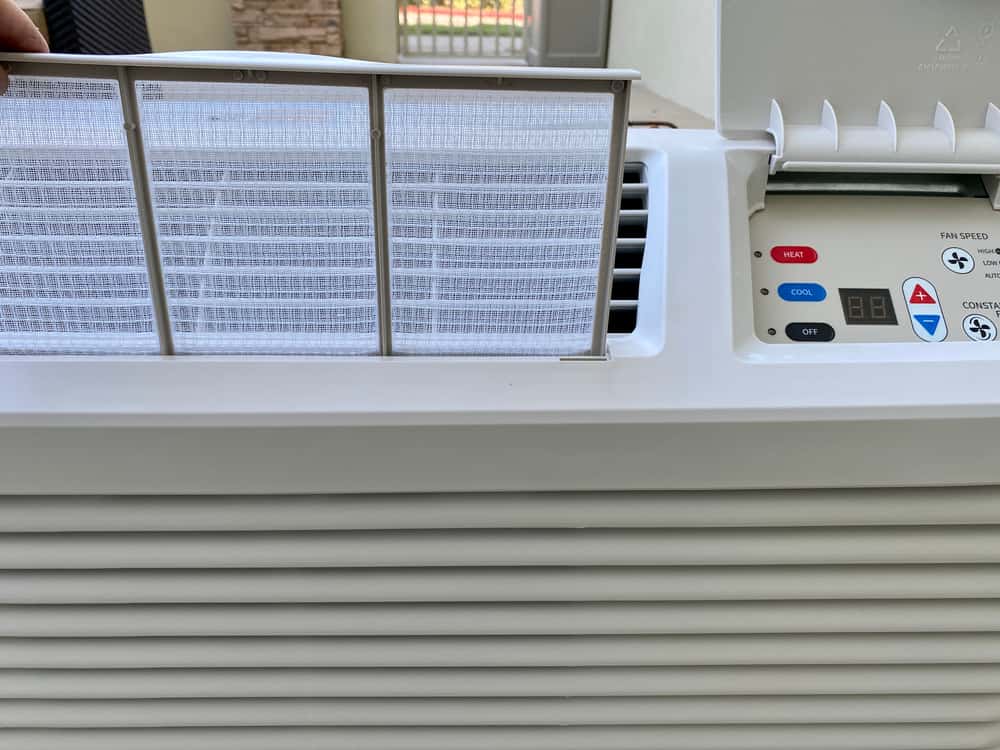
The RSZ’s programmable digital touchpad controls — with 5/2 or 7-day scheduling — also give building residents and managers a tool that older units simply didn’t have: the ability to reduce energy use during unoccupied hours automatically. That’s a small feature with a meaningful impact across a large building.
Finding the Right PTAC Replacement in Queens, NYC
The RSZ Series isn’t the right answer for every building or every situation. But for Queens properties running aging legacy PTACs — units that are loud, inefficient, or from brands that no longer exist — it’s one of the most practical upgrades available. It fits existing wall sleeves, it runs quietly, it meets LEED efficiency standards, and it supports Local Law 97 compliance in a borough where that pressure is only going to increase.
We’ve been working in Queens buildings long enough to know that the decision is rarely just about the unit. It’s about the tenants who have to live with it, the managers who have to field the complaints, and the owners who have to weigh every repair against the cost of doing nothing.
If you’re at that crossroads, Lion-Air Enterprises is ready to talk through it with you — honestly, without pressure, and with 50 years of Queens PTAC experience behind every recommendation.