
Summary:
If you manage a building in Queens — whether it’s a six-story walk-up in Astoria, a co-op in Forest Hills, or a commercial property near LaGuardia — there’s a good chance you’re already familiar with the slow, frustrating decline of an aging PTAC unit. The noise complaints. The unit that heats on one side of the building and not the other. The repair call that buys you three more months before the same problem comes back.
At some point, the math stops working in favor of another fix. The RSCC Series exists precisely for that moment — and understanding what it is, and whether it’s right for your building, is worth a few minutes of your time.
What Is the RSCC Series and Which Buildings Actually Need It?
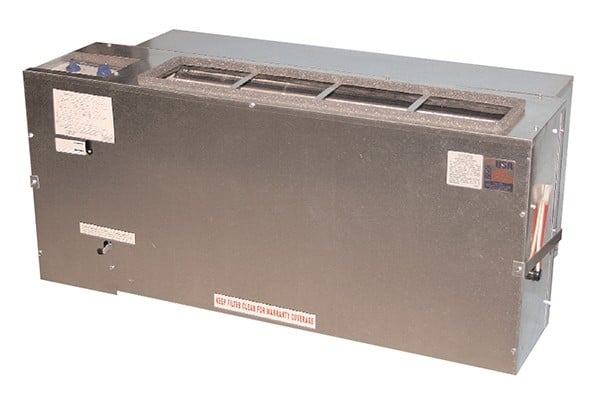
The Ice Air RSCC Series is a high-efficiency replacement PTAC unit engineered specifically to drop into the same wall sleeves used by the older Ice-Cap RSCT and Ice Air RSET series. If your building is still running either of those units, the RSCC is their direct successor — same footprint, no structural modifications required.
It covers four models with cooling capacities ranging from 9,100 to 16,400 BTU/h, which means it handles everything from a studio apartment to a larger one-bedroom configuration. It’s available in multiple voltage configurations — 115V, 208/230V, and 265/277V — so it works across virtually any electrical setup you’re likely to find in Queens’ varied building stock.
This isn’t a one-size-fits-all product dressed up to look flexible. We engineered it with the retrofit scenario in mind.
How the RSCC Series Handles NYC's Toughest Conditions
Queens is not a forgiving environment for PTAC units. The buildings along the 7 train corridor — through Woodside, Jackson Heights, and Flushing — deal with constant subway vibration that accelerates wear on motor bearings and mounting hardware in ways that simply don’t happen in suburban or southern markets.
A motor bearing that might last twelve years under normal conditions can wear out in seven or eight years in a Queens apartment building. That’s not a hypothetical — it’s a pattern we’ve seen repeatedly over more than five decades of working in this market.
Add in the temperature swings. Queens summers regularly push heat index values above 95°F, and winters drop well below freezing. A PTAC unit here doesn’t get a break — it cycles through heating and cooling demands year-round, which compounds the wear from vibration and urban debris.
The units that hold up are the ones built to commercial-grade standards, not residential specs with commercial branding. The RSCC Series uses G90 galvanized steel construction with powder-coated drain and base pans — materials chosen for durability in exactly this kind of demanding, high-cycle environment.
Its advanced tangential indoor blower delivers balanced airflow at noticeably quieter sound levels than the aging units it replaces. For property managers who’ve fielded noise complaints from tenants in Sunnyside or Ridgewood, that detail alone is worth paying attention to. A quiet unit is one fewer thing on your plate.
The unit also incorporates advanced LEED-compatible features, which matters more now than it did even a few years ago. NYC’s Local Law 97 imposes carbon emission caps on buildings over 25,000 square feet, with penalties that began escalating in 2024. Local Law 87 requires mandatory energy audits every ten years for buildings over 50,000 square feet.
Upgrading aging, inefficient PTACs to a model with EERs reaching as high as 10.7 is one of the most straightforward compliance moves available to Queens building owners — and it’s one that also shows up on the monthly ConEdison bill as real savings.
Should You Repair Your Aging PTAC or Replace It With an RSCC?
This is the question most building managers are actually wrestling with, and it deserves a straight answer rather than a sales pitch. The honest version is: it depends on where the unit is in its life cycle and what the repair is going to cost relative to what replacement delivers.
A unit that’s seven or eight years old and needs a minor fix — a thermostat, a filter, a fan motor — is probably worth repairing. But if you’re looking at a unit that’s been serviced multiple times in the past two years, is running at significantly degraded efficiency, and is generating ongoing tenant complaints, the calculus shifts.
When repair costs start approaching half the cost of a replacement unit, and when the unit is operating at an EER well below what current models deliver, you’re not saving money by repairing — you’re deferring a replacement while paying more in energy costs and service calls in the meantime.
There’s also the timing factor that Queens building managers know well. A PTAC that limps through the spring is likely to fail during the first serious heat event in June or July — which means an emergency service call at premium rates, tenant complaints, and the possibility of a lease non-renewal conversation. Replacing a marginal unit in April, before the season peaks, is almost always less disruptive and less expensive than managing the fallout of an in-season failure.
One misconception worth clearing up: many building owners assume replacing a PTAC unit means tearing into the wall and dealing with construction. For buildings that already have RSCT-compatible sleeves, the RSCC Series drops in as a direct replacement. There’s no new sleeve required, no wall work, no extended downtime. The installation is cleaner and faster than most managers expect, which matters when you’re coordinating around tenants.
The programmable digital touchpad controls on the RSCC — with 5/2 or 7-day scheduling — also give tenants and building managers a tool that aging units simply don’t have. The ability to set heating and cooling schedules reduces energy waste without requiring any behavioral change from tenants. For a building running dozens of units, that adds up in a way that shows on the utility statement.
PTAC Repair and RSCC Series Service in Queens, NYC
Knowing what the RSCC Series is and knowing who can actually service it correctly in Queens are two different things. This is a specific product with specific compatibility requirements — wall sleeve dimensions, voltage configurations, refrigerant handling under EPA 608 certification.
A generalist who hasn’t worked with Ice Air equipment before can make installation errors that void the warranty or create problems that don’t show up until the first heat wave. We’ve been working on PTAC systems in NYC for over 50 years — and we’re headquartered right here in Long Island City, Queens. That’s not a marketing detail.
It means faster response times, genuine familiarity with the building stock in this borough, and technicians who’ve seen what Queens does to PTAC units over the course of years, not months.
What to Expect When You Call for RSCC Series Service in Queens
When a building manager calls us about an RSCC Series unit — or about an aging RSCT or RSET that needs to be evaluated for replacement — the first thing we do is a thorough diagnostic assessment of the full system, not just the symptom that prompted the call. That matters because the surface problem is often not the whole story.
A unit that’s blowing warm air on a hot day might have a refrigerant issue, a failing compressor, or a control board problem — and the right answer for each of those is different. We carry parts inventory on our trucks, which means most repairs can be completed in a single visit rather than requiring a callback after parts are ordered.
For building managers coordinating around tenant schedules and building access, that’s not a small thing. A two-visit repair is twice the coordination, twice the disruption, and twice the time before the problem is resolved.
We’re also on call year-round — nights, weekends, and holidays included. PTAC failures in Queens don’t happen on a schedule, and a building full of tenants in August or January can’t wait until Monday morning. When we get a call from a building manager explaining that a tenant has a health condition and the unit is down in the middle of a heat event, we move quickly.
For buildings where multiple units are approaching end of life, we can assess the full scope and help prioritize which units to address first based on age, condition, and where they sit in the building’s energy profile. That kind of portfolio-level thinking is what separates a service call from an actual service relationship.
Frequently Asked Questions About RSCC Series PTAC Repair and Replacement in Queens
**Does the RSCC Series require a new wall sleeve?** Not if your building already has RSCT-compatible sleeves. The RSCC was engineered as a direct retrofit replacement for the Ice-Cap RSCT and Ice Air RSET series, which means it fits the existing sleeve footprint without wall modifications. This is one of the more common misconceptions we encounter in NYC — building owners who’ve been putting off replacement because they assumed it meant construction work. In most Queens buildings with existing RSCT infrastructure, the swap is significantly cleaner than that.
**How do I know if the RSCC Series is the right replacement for my unit?** The straightforward answer is to have someone who knows Ice Air equipment look at what you currently have. The RSCC covers four models across a BTU range of 9,100 to 16,400, so matching capacity to your existing setup is part of the evaluation. Voltage configuration matters too — the RSCC is available in 115V, 208/230V, and 265/277V, and confirming the right spec for your building’s electrical system before ordering avoids complications on installation day.
**Does upgrading to the RSCC Series help with NYC’s Local Law 97 compliance?** It can, yes. Local Law 97 imposes carbon emission limits on NYC buildings over 25,000 square feet, with penalties that escalate through 2030. Replacing aging PTACs running at lower efficiency ratings with RSCC Series units — which achieve EERs up to 10.7 — reduces the building’s overall energy consumption and carbon output. For Queens building owners who are already running the numbers on LL97 compliance, PTAC replacement is one of the more accessible levers available. We’re familiar with the regulatory context and can speak to how equipment upgrades factor into the broader picture.
**How long should a PTAC unit last in a Queens apartment building?** In most markets, the standard estimate is somewhere in the range of fifteen years. In Queens, that estimate tends to run shorter. Subway vibration along lines like the 7, the E/F/M/R, and the N/W accelerates wear on motor bearings and mounting components. Year-round demand cycling — hot, humid summers followed by cold winters — compounds the stress. We’ve seen units in Queens buildings that were well-maintained but simply wore out faster than the national average would suggest. If your units are approaching ten years old and starting to generate service calls, it’s worth evaluating them seriously rather than assuming another five years of reliable performance.
Ready to Stop Guessing and Get Your Building's PTAC System Right?
The RSCC Series is a well-engineered product built for exactly the kind of buildings and conditions Queens has — dense, demanding, and not particularly forgiving of equipment that’s past its prime. Whether you’re managing a pre-war walk-up in Astoria, a mid-century apartment complex in Jackson Heights, or a commercial property near the Van Wyck, the decision to repair or replace an aging PTAC unit is one worth making with good information rather than under emergency pressure.
If your building still has Ice-Cap RSCT or Ice Air RSET units that are generating complaints or running inefficiently, the RSCC Series is the designated replacement — and the installation is simpler than most building managers expect. If you’re not sure where your units stand, a proper diagnostic assessment will tell you what you’re actually working with.
We’ve been doing this work in Queens for over fifty years. If you have questions about the RSCC Series, want an honest evaluation of your current units, or need service on existing equipment, reach out to us directly. We’re local, we’re licensed, and we know this product.