Summary:
Common PTAC Problems NYC Property Owners Face
The most common warning signs that you need PTAC repair include units failing to reach desired temperatures, lack of air coming through vents, and strange noises from the unit. These aren’t random breakdowns—they’re your PTAC telling you something specific is wrong.
When units aren’t performing as they once did, it may be a simple result of not having regular service, or it could be more serious issues like refrigerant leaks, though dirty units can often be resolved with steam cleaning. The key is understanding what you’re dealing with before calling for help.
NYC’s urban environment creates unique challenges for PTAC systems that other cities don’t face. Your air filter needs attention every 30 days in NYC where dust, pollen, and urban debris constantly circulate, and a clogged filter forces your system to work 40% harder.
Water Leaks and Drainage Issues
One of the most common issues we get asked to fix is when AC units are leaking water, which can be caused by units not being serviced or condensate pump failure, and this type of repair is nearly always completed within the first hour on-site.
Water problems might seem minor, but they’re actually early indicators of bigger issues. The condensate drain deserves special attention in NYC’s humid summers, and pouring a cup of white vinegar down the drain line quarterly prevents algae buildup, since a blocked drain can cause water damage to walls and floors, creating problems that extend far beyond your PTAC unit.
Don’t ignore water pooling around your unit. If you notice water pooling around your unit, address the drainage issue immediately rather than waiting for your next maintenance cycle. What starts as a small puddle can quickly become wall damage, floor damage, and a much more expensive repair bill.
The drainage system in your PTAC works harder in NYC than in drier climates. If the unit has an internal drain system, the sleeve should be leveled so that condensate water drains into the connected drain line, and water should not overflow to the room side or outside. When this system gets overwhelmed or clogged, you’ll see the results fast.
Filter and Airflow Problems
A dirty or clogged PTAC filter significantly reduces airflow and may lead to compressor failure, while a clean PTAC unit will run at peak efficiency, ensuring safety and a more comfortable stay indoors. Your filter is doing more work in NYC than you might realize.
Studies from the U.S. Department of Energy show that something as simple as a clogged filter can raise cooling costs by 15 percent, which is money literally disappearing from your budget every month. That’s not just an efficiency problem—it’s money walking out your door.
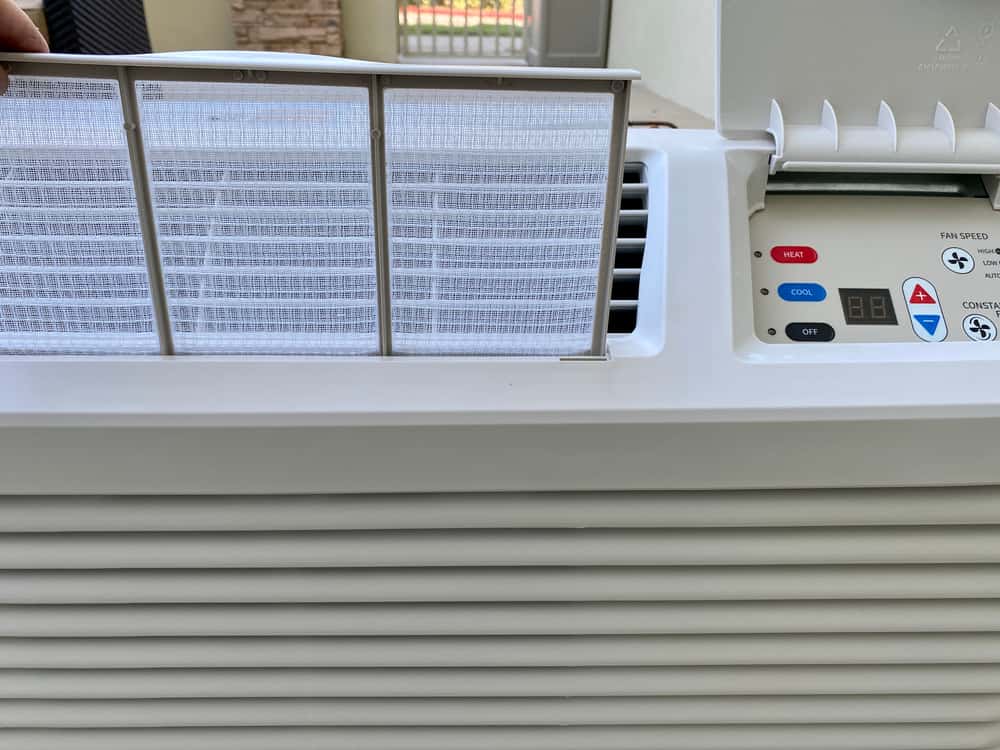
Filter maintenance goes beyond just replacing them—remove your filter and hold it up to light, and if you can’t see through it clearly, it needs cleaning or replacement, with washable filters rinsed with lukewarm water and mild soap, then dried completely before reinstalling.
The reality is that most people underestimate how quickly filters get dirty in NYC’s environment. Cleanliness is very important for 100% working operation of PTAC units, and dirt and dust have side effects on operation that result in spitting water, leaked coils, and other common problems such as the system turning on and off. Regular filter attention prevents these cascading problems from developing.
When to Repair vs Replace Your PTAC Unit
The rule of thumb is: if repair costs less than 30% of the price of a new unit and this is your first issue, fix it, but when you delay repairs, you often cross that threshold without realizing it, and when repair costs exceed 50% of the price of a new unit, replacement is recommended.
If your PTAC is a regular in your maintenance logs—think 2-3 repairs in the past year—it’s time for replacement, as band-aiding problems over and over adds up quick, and you don’t want your unit to become that money pit that keeps demanding attention every few months.
The math gets clearer when you factor in NYC’s unique challenges. The math gets ugly fast when emergency service calls cost more and parts become harder to find for older units.
Hidden Costs of Delaying PTAC Repairs
Delaying necessary PTAC repair can result in more severe damage to the unit, leading to higher repair costs, as ignoring minor issues such as unusual noises, weak airflow, or inconsistent cooling can cause the system to deteriorate further.
The compressor is often the toughest part of your PTAC unit, but compressor issues can cause problems from improper temperatures to loud noises and refrigerant leaks, and when you ignore early warning signs like weak cooling, you’re putting extra stress on the compressor, and if it’s gone bad, you’re looking at a repair that costs as much as a new unit.
The financial reality is stark. What could have been a $300 repair for a faulty thermostat or clogged drain becomes a $3,000+ replacement job. This isn’t scare tactics—it’s the predictable result of putting off maintenance.
The pattern is always the same: ignore the warning signs, hope the problem goes away, then face a much larger bill when the system finally fails completely, while addressing problems early not only minimizes expenses but also extends the lifespan of the PTAC unit. Property owners who understand this save thousands over time.
Energy Efficiency and Professional Maintenance Benefits
Most PTAC units in NYC are operating far below their potential, wasting energy and driving up bills unnecessarily, but with the right repair approach, you can cut those costs significantly while actually improving comfort.
While you might spend $150-300 for professional PTAC service, the efficiency improvements often reduce your monthly energy bill by $30-60, which means the service pays for itself in just a few months, then continues saving you money for years.
By properly cleaning and maintaining PTAC units, homeowners can reduce energy consumption by up to 25%, and having regular maintenance can prevent expensive repair costs. These aren’t small improvements—they’re significant changes to your operating costs.
When we perform comprehensive service, we’re essentially conducting an energy audit of your heating and cooling system, and what we find often surprises property owners who thought their units were “working fine,” with refrigerant issues topping the list of efficiency problems. You might think your unit is fine, but a professional assessment often reveals hidden inefficiencies costing you money every month.
Finding Reliable PTAC Repair Services in NYC
Remember that maintenance costs pale compared to emergency repairs or premature replacement, and in NYC’s demanding climate, professional maintenance isn’t an expense—it’s insurance against costly failures and uncomfortable situations.
Look for companies with proven track records, proper licensing and insurance, and transparent pricing. The best PTAC service providers guarantee not just that your unit will work, but that it will work efficiently, and this might include warranties on energy consumption levels or promises to return if efficiency doesn’t improve as expected.
When you need professional PTAC repair in NYC, don’t settle for generic HVAC companies that treat PTAC units as an afterthought. Choose specialists who understand the unique challenges of NYC’s environment and have the experience to get your system running efficiently. For expert PTAC repair services that combine decades of experience with customer-first service, contact Lion-Air Enterprises.