Summary:
What Causes PTAC Units to Rattle and Vibrate
PTAC units make some noise during normal operation. A low hum from the compressor, a soft whoosh from the fan—that’s expected. But rattling, buzzing, or vibrations that travel through your wall? That’s your unit telling you something needs attention.
The usual suspects fall into three categories: loose hardware, dirty or damaged components, and installation issues. Loose mounting brackets and screws vibrate against the wall sleeve. Unbalanced fan blades from dirt buildup create wobbling that shakes the entire unit. And if the unit wasn’t installed with proper tilt or secure mounting, every cycle amplifies the noise.
In NYC and Queens, PTAC units work harder than in many other places. The mix of old brownstones and modern buildings means these systems often operate in spaces they weren’t originally designed for, pushing them to their limits and accelerating wear on moving parts.
Loose Mounting Brackets and Hardware Create the Most Common Rattling
Start here first. Loose screws, panels, and mounting brackets are the easiest fixes and the most frequent cause of PTAC rattling noise. Over time, the constant vibration from your compressor and fan motor works screws loose. What was secure six months ago might now be rattling against metal housing or the wall sleeve.
Check every visible screw on the front panel, side panels, and any mounting hardware you can safely access. Tighten them with a screwdriver—sometimes a half-turn is all it takes to eliminate a rattle that’s been driving you crazy for weeks. Pay special attention to the mounting brackets that secure your PTAC chassis to the wall sleeve. If these aren’t tight, the entire unit rocks slightly with each cycle, creating noise that travels through your walls.
External factors matter too. PTAC units that aren’t properly secured in their wall sleeves will rattle and vibrate excessively no matter how well-maintained the internal components are. The unit should sit firmly in its mounting sleeve with all support brackets tight and secure. Any gap or looseness here becomes an amplifier for every vibration the compressor creates.
If your unit sits in an older wall sleeve, check the sleeve itself for warping or damage. A bent or corroded sleeve won’t hold the unit securely, and no amount of tightening the unit’s screws will fix noise caused by a compromised sleeve. Replacing the sleeve might seem like overkill, but it’s often the only real solution when the foundation itself is the problem.
Dirty or Unbalanced Fan Blades Cause Vibration Throughout the Unit
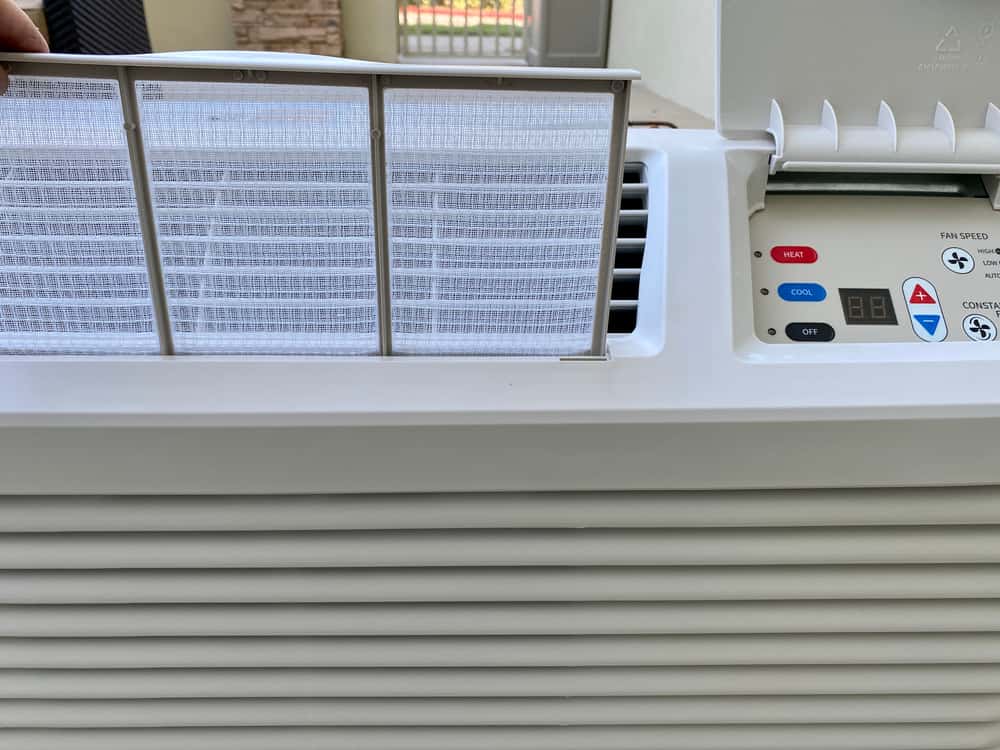
Your PTAC has at least one fan blade, usually two—one for indoor air circulation and one for the outdoor condenser. When these blades accumulate dirt, dust, and debris, they fall out of balance. An unbalanced fan blade wobbles as it spins, creating vibrations that travel through the entire unit and into your wall.
This isn’t just about noise. An unbalanced fan works harder, wears out faster, and can damage the motor bearings over time. The fix is straightforward: turn off power to the unit, remove the front cover, and carefully clean the fan blades with a soft brush or damp cloth. Don’t bend them—even a slight bend throws off the balance and makes the problem worse.
Sometimes debris gets caught in the fan assembly itself. Leaves, paper, pet hair—anything that gets pulled into the intake can lodge in the fan housing and create scraping or rattling sounds. Remove any visible debris from the fan housing and air intake areas while you’re cleaning the blades.
If cleaning doesn’t eliminate the vibration, the fan blade itself might be damaged or warped. Plastic fan blades can crack or warp from heat exposure, and metal blades can bend from impact. A damaged fan blade needs replacement, not repair. Trying to straighten a bent blade or patch a cracked one just postpones the inevitable failure and potentially damages the motor in the meantime.
Fan blade replacement isn’t particularly complex, but it does require the right replacement part for your specific PTAC model. Using the wrong blade—even if it seems to fit—can create worse vibration problems than you started with. If you’re not confident identifying and installing the correct replacement, this is where calling a PTAC specialist saves you time and prevents additional damage.
Professional PTAC Repair Methods That Actually Stop the Noise
Some PTAC noise issues respond well to DIY fixes. Others need professional expertise to diagnose correctly and repair safely. Compressor problems, refrigerant leaks, and electrical issues aren’t DIY territory—they require specialized tools, knowledge, and licensing to handle properly.
We approach noise problems systematically. We listen to the specific sounds, identify patterns, and trace vibrations to their source rather than guessing. This diagnostic approach means we fix the actual problem, not just the symptom, which is why our repairs tend to hold up where quick fixes fail.
With 50 years of PTAC repair experience in NYC and Queens, we’ve seen thousands of these units and know which repairs actually work versus which ones just buy you a few more weeks before the noise returns.
Compressor Noise Repair and Vibration Dampening Solutions
Your compressor is essentially the engine of your PTAC unit. It squeezes refrigerant to create cooling, and that mechanical process makes sound. A steady, low hum is normal. Deep grinding, loud clicking during startup, or excessive vibration that shakes the wall isn’t.
Compressor problems require professional diagnosis. A failing compressor bearing creates grinding that occurs whenever the cooling cycle runs. This type of grinding usually signals the need for professional PTAC repair, as compressor issues rarely resolve themselves and attempting DIY compressor repairs can damage the entire system.
But even a healthy compressor can create excessive noise if the unit isn’t properly isolated from the wall structure. This is where vibration dampening comes in. We can install foam weatherstripping between the unit and sleeve edges, add rubber or neoprene vibration pads under the unit’s bottom, or install thin foam gaskets around the sleeve opening.
These dampening solutions work by breaking the path that vibrations travel. Instead of vibrations transferring from the compressor through the chassis, into the wall sleeve, and then amplifying through your drywall, the dampening materials absorb the energy. Foam-sealed wall sleeves can reduce vibration by about 30%, which often makes the difference between noise that disrupts sleep and noise you barely notice.
The installation matters as much as the materials. Vibration pads need to be positioned correctly under the unit’s mounting points, not just tossed underneath randomly. Foam gaskets need to seal completely around the sleeve opening without blocking drainage or airflow. Our installers know these details and have the experience to get the positioning right the first time.
When Mounting Bracket Repair and Sleeve Replacement Are Necessary
Sometimes the problem isn’t with your PTAC unit at all—it’s with how the unit sits in the wall. Mounting brackets can bend, break, or corrode over time, especially in NYC’s humid climate. When brackets fail, the unit doesn’t sit securely in the sleeve, and every vibration from the compressor gets amplified.
Mounting bracket repair involves removing the PTAC chassis from the wall sleeve, inspecting the brackets for damage, and either reinforcing or replacing them. This isn’t a quick fix, but it’s often the only real solution when the brackets are the source of the noise. Trying to tighten loose brackets without addressing underlying damage just means the problem returns in a few weeks.
Wall sleeves themselves can warp, rust, or develop cracks. A damaged sleeve won’t hold your PTAC unit properly no matter how good the mounting brackets are. If the sleeve is warped or corroded, replacement is the only option that actually fixes the problem. New sleeves slide into the same wall opening, but installation requires precision to ensure proper tilt for drainage and secure mounting.
The tilt is critical. PTAC sleeves should be slightly tilted downward toward the outside—about a quarter inch over the full depth. This tilt ensures condensation drains outside instead of pooling inside the unit or leaking into your room. If your unit was installed without proper tilt or the sleeve has shifted over time, you might have both noise problems and water leakage issues.
We check the sleeve for rust, corrosion, cracks, and proper tilt before installing or reinstalling a PTAC chassis. We seal gaps around the sleeve with foam weatherstripping or gasket material and use silicone caulk on visible gaps between the wall and sleeve. These sealing steps don’t just reduce noise—they also improve energy efficiency and prevent rain intrusion.
If your PTAC is making noise and you’ve noticed water leaking inside, the sleeve installation is almost certainly the culprit. This is one situation where DIY fixes rarely work because the problem requires removing the unit, assessing the sleeve and mounting system, and potentially replacing components before reinstalling everything correctly.
Getting Your PTAC Unit Running Quietly Again
Most PTAC noise problems have solutions. Loose hardware gets tightened. Dirty fan blades get cleaned or replaced. Vibration gets dampened with proper materials and installation. The key is accurate diagnosis—understanding what’s causing the specific noise your unit makes—and then applying the right fix, not just the easiest one.
Start with the simple checks: tighten visible screws, clean fan blades, remove debris from intakes. If the noise persists or you hear grinding, deep vibration, or sounds that seem to come from inside the unit, that’s when professional expertise saves you time and prevents bigger problems. Early intervention often means simpler, less expensive repairs compared to waiting until complete unit failure occurs.
When you need PTAC repair in Queens or NYC that actually fixes the problem, Lion-Air Enterprises brings 50 years of specialized experience to every service call. Our technicians diagnose the real issue, carry the parts needed for immediate repairs, and back everything with a one-year guarantee because we know our work holds up.