Summary:
PTAC Wall Sleeve Rust And Leaks: When You Must Replace It
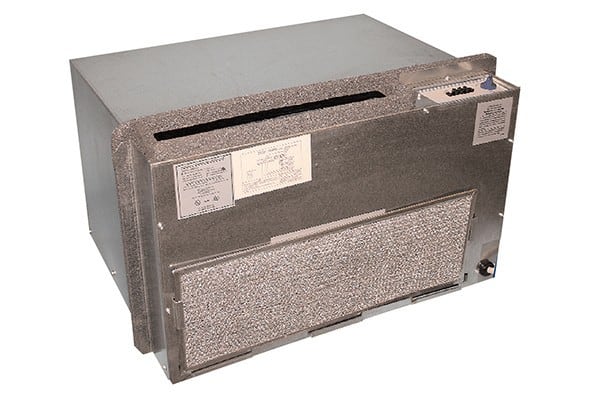
The wall sleeve is the steel housing built into your exterior wall. The PTAC unit, which is the heating and cooling chassis, slides into it. The sleeve is what keeps outside air, water, and weather from getting into your building around the unit. It also has to maintain a precise outward slope so that condensate water drains to the exterior rather than into your room.
When the sleeve works correctly, you never think about it. When it fails, it tends to fail quietly: rust spreads from the inside out, the drainage slope shifts as the building settles, and drain holes silt up until the day water shows up somewhere it shouldn’t.
Why Queens Buildings Are Especially Vulnerable To Sleeve Corrosion
Queens has a specific combination of factors accelerating sleeve deterioration faster than most markets. The borough sits close to Jamaica Bay and the East River, and the ambient humidity in summer regularly climbs above 65 percent. That level of moisture, sustained over decades, is hard on galvanized steel, which is what most PTAC sleeves are made of.
Add in New York City’s freeze-thaw winters, and you have a cycle expanding existing rust pits every year. A sleeve looking a little rusty in October can be structurally compromised by February. By the time you deal with a visible water leak in July, the sleeve may have been degrading silently for years.
This is true in the older building stock defining so much of Queens. Pre-war and mid-century apartment buildings in Astoria, Forest Hills, Sunnyside, and Rego Park were often built with PTAC infrastructure untouched since original installation. Some of those sleeves are original to construction, meaning they’ve been in that wall for 40 to 70-plus years. The PTAC unit sitting in them has probably been replaced two or three times, while the sleeve hasn’t.
There is also the settlement factor. As buildings age, they shift slightly. A sleeve installed with the correct outward slope, about a quarter-inch downward toward the exterior, can gradually tilt inward as the wall around it moves. Now, instead of draining outside, condensate pools inside the unit, overflows the drain pan, and finds its way into your wall cavity or the room below.
One property manager documented this exact scenario across an entire building: three-quarters of the PTAC units were found to be tilted incorrectly, all of them leaking into the interior. The units themselves were fine. Every one of those sleeves needed to be corrected or replaced.
Will A PTAC Drain Kit Fix The Leak, Or Do You Need A New Sleeve?
This is the question sending many Queens residents and property managers down the wrong path. A PTAC drain kit, sometimes called a condensate drain kit, routes water from the unit’s drain pan to an external drain line rather than relying on evaporation and gravity alone. In certain situations, it is useful. If drainage routing is the issue, a drain kit can solve it.
However, a drain kit cannot fix a rusted-through sleeve. It cannot correct a sleeve losing its outward slope. It cannot seal a sleeve letting outside air and moisture into the wall cavity around it. If the sleeve itself is the problem, a drain kit is a patch on a structural failure, and the leak will return, usually within the same season.
The way to tell the difference comes down to what you observe. If the drain line is clogged and clearing it stops the leak, the sleeve may be fine. If the leak returns within a week or two of clearing the drain, that is a strong signal the sleeve’s drainage slope is compromised. If you can see visible rust on the drain pan or the sleeve interior, or if the exterior shows rust bleeding through the paint or caulk line, the sleeve needs to be evaluated for replacement instead of patched.
Replacing a PTAC unit without addressing the sleeve is another version of the same mistake. A brand-new unit sitting in a rusted, improperly sloped sleeve develops the same leak pattern as the old one. The unit isn’t the source of the problem; it is just the most visible part of a system including the sleeve, drainage path, and wall assembly. Getting that right requires someone understanding all three, not just someone knowing how to swap a chassis.
The standard PTAC sleeve is 42 inches wide by 16 inches tall, but older Queens buildings sometimes have non-standard dimensions complicating replacement. Knowing what you are working with before ordering a sleeve or unit separates a clean job from a multi-week ordeal.
PTAC Sleeve Replacement In NYC: What The Process Involves
Replacing a PTAC wall sleeve in a Queens apartment building differs from replacing one in a single-family suburban home. The dense multi-unit environment adds layers, including building management approval, co-op board requirements, NYC DOB compliance, and neighboring units, that general HVAC contractors may not be prepared for.
The sleeve itself must meet NYC standards: proper-gauge steel, sealed exterior surround, correct outward slope, and an insulated gap between sleeve and wall framing. A non-compliant installation can trigger a DOB violation. In buildings where work is subject to board approval, showing up with the right credentials, licensed, insured, and EPA-certified, is not optional.
Do You Need A Permit To Replace A PTAC Wall Sleeve In NYC?
The short answer is that it depends on the task. Replacing the PTAC chassis in an existing sleeve does not require a permit, provided the sleeve stays in place and a licensed electrician handles the electrical connection. That electrical requirement is a New York City rule applying even to straightforward chassis swaps.
When the sleeve itself needs to come out and be replaced, the scope changes. You work with the exterior wall, meaning building management or the co-op board typically gets involved, and the work must meet NYC DOB standards for the wall assembly. PTAC units three tons or under, covering virtually every residential and hotel PTAC in Queens, are exempt from the Certificate of Compliance requirement, keeping the permitting side manageable. Yet, manageable does not mean devoid of requirements.
This is where experience in NYC buildings matters. Contractors working primarily in single-family homes or outside the five boroughs may lack familiarity with building management coordination, fail to carry co-op board insurance, or misjudge sleeve sizing in Queens older building stock. Getting the sleeve in correctly, meaning leveled, sloped, sealed with exterior-grade silicone, and insulated at the wall cavity gap, is a precision job impacting units on every floor if done incorrectly.
We have performed this work in Queens and across New York City for more than 50 years. Our technicians know Ice Air, Islandaire, and Daikin (formerly McQuay), the three brands dominating PTAC inventory in Queens apartment buildings and hotels. We service units we didn’t install and provide a written estimate before starting work. That transparency matters because billing surprises are common in this category, and clear communication upfront avoids difficult conversations later.
How To Know When Your PTAC Sleeve Has Reached The End Of Its Life
There is no single moment when a sleeve fails. It is a gradual process, and signs appear in a specific order. The first is visible surface rust on the exterior surround, around the caulk line, or on the drain pan inside the unit. Surface rust alone isn’t always a reason to replace the sleeve immediately, but it warrants closer inspection.
The next stage is when rust progresses to the drain pan or sleeve interior walls. At this point, the metal loses structural integrity in critical drainage areas. A rusted drain pan cannot hold water properly, causing seepage. That is when water appears on the floor, on the wall below, or in the ceiling beneath.
The clearest sign that the sleeve must be replaced, rather than patched, shimmed, or fitted with a drain kit, is when a leak returns shortly after repair. If a technician clears the drain and corrects the slope, but the unit leaks again within a week or two, the sleeve is the problem. Exterior inspection also helps: cracked caulk pulling away from the wall, exterior grille rust bleeding through, or a shifting sleeve indicate structural failure.
One detail to note: PTAC units are typically replaced every seven to ten years, whereas sleeves are supposed to outlast multiple unit cycles. In practice, a sleeve installed in a Queens apartment building in 1975 and left untouched has outlasted four or five unit replacements without a close look. The unit swaps out while the sleeve stays until failure occurs.
If you manage a building with multiple PTAC units and observe water issues across several apartments, evaluate sleeves systematically rather than handling units one by one. This approach identifies isolated incidents versus building-wide sleeve aging.
Getting PTAC Sleeve Replacement Right In NYC
A leaking PTAC is rarely just a unit problem. In Queens, where many buildings rely on sleeves installed decades ago, the sleeve is usually where the root issue lies. Clearing a drain or buying a drain kit might buy a few weeks. Replacing the unit without touching the sleeve might buy a season. However, if the sleeve is rusted, sloped incorrectly, or compromised structurally, the leak returns.
The fix becomes straightforward once the true issue is identified. It requires understanding the full picture, including the sleeve, drainage path, wall assembly, and NYC building requirements.
Call Lion Enterprises of New York, LLC today at 718-433-4360 to schedule your PTAC sleeve inspection and get a written estimate before any repair work begins!