
Summary:
Most heating failures aren’t surprises. They’re the result of something your system was already trying to tell you, such as a noise you figured was normal, a room that never quite got warm, or a bill that seemed high but not high enough to call someone about.
Nassau County winters don’t give you a grace period. When temperatures drop into the low 20s and wind off the South Shore pushes that number lower, a heating system that was fine in October becomes a crisis by Thanksgiving. We’ve seen it happen hundreds of times across Long Island. Here are the seven signs that your system is in trouble, along with what to do before it becomes an emergency.
The 7 Warning Signs Your Nassau County Heating System Needs Repair
These aren’t obscure technical symptoms. They’re the things homeowners notice and then talk themselves out of acting on until they’re stuck making emergency calls in February. If any of these sound familiar, your system is telling you something worth listening to.
Uneven heat is the first sign. If one room is warm and another stays cold no matter what you set the thermostat to, something is off, like a failing component, a distribution issue, or a system struggling to keep up.
Unusual noise is the second sign. Banging, rattling, squealing, or rumbling from a heating system are diagnostic signals, not background noise to get used to. A system running quietly is a system running correctly.
Signs 3 Through 5: What Your Energy Bills And Thermostat Are Telling You
Rising energy bills represent the third sign. A heating bill noticeably higher than the same month last year, without a corresponding change in how cold it’s been or how you’re using the system, points to efficiency loss. New York State has some of the highest residential energy rates in the country. When a heating system starts losing efficiency, it runs longer and harder to produce the same amount of heat, and your bill reflects that before anything else visibly breaks.
Short cycling is the fourth sign, occurring when your system kicks on, runs for a minute or two, shuts off, and repeats that cycle. This is one of the more commonly misread symptoms because the heat comes on. But a system that short cycles is working against itself, wearing down components faster and never reaching a stable temperature.
A thermostat that doesn’t match reality is the fifth sign. You set it to 70 and the house feels like 62. You bump it up and nothing changes. This can point to a thermostat issue, but it can also indicate a serious problem with the system itself, such as a failing heat exchanger, a weakening blower motor, or a refrigerant issue if you’re running a heat pump or PTAC unit.
Nassau County’s housing stock skews older. A significant portion of homes in Levittown, Hempstead, and Massapequa were built between the late 1940s and early 1960s, and many are still running boilers or furnaces past their designed service life. The older the system, the more meaningful each of these symptoms becomes.
Signs 6 And 7: The Two You Can't Afford To Ignore
Visible rust, corrosion, or moisture around the unit is the sixth sign. This one gets dismissed as cosmetic, but it’s not. Rust on a boiler, moisture pooling near a furnace, or visible corrosion on a PTAC unit are signs that components are degrading, and in some cases, that a heat exchanger may be compromised.
A cracked heat exchanger is one of the serious heating system failures because it can allow carbon monoxide to enter the living space. The Consumer Product Safety Commission estimates that faulty heating equipment is a leading cause of non-fire CO poisoning deaths each year. In Nassau County, where many homes were retrofitted with tighter insulation after the 1970s energy crisis, there’s less natural ventilation to dilute CO entering the space.
Age combined with any of the above is the seventh sign. The average furnace lasts 15 to 20 years. A well-maintained boiler can go longer, sometimes 25 to 30 years, but maintenance is required to reach that age. If your system is older than 15 years and you’re seeing any of the other six signs, you’re not dealing with a minor tune-up situation. You’re dealing with a system running out of time.
Industry data suggests that roughly 75% of no-heat emergency calls in winter involve problems that would have been caught during a pre-season inspection. That’s a number worth noting.
HVAC Repair In Nassau County, NY: What To Expect When You Call
This is the question coming up on almost every service call involving an older system, and it deserves a straight answer rather than a default push toward replacement. The general industry guidance from ENERGY STAR and the Air Conditioning Contractors of America is that when repair costs exceed roughly 50% of the replacement value of a system already more than 10 years old, replacement makes more financial sense over time. But that’s a guideline, not a rule.
A boiler in a Long Beach co-op properly serviced every year is a different situation from a furnace in a Levittown ranch untouched in a decade. The condition of the system, its service history, and what’s wrong all factor into that decision. What you want from a contractor is an honest assessment, not a reflexive recommendation to replace everything because it’s easier to sell.
We’ve been doing this for over 50 years in the New York City metro area, and one thing that hasn’t changed is that the repair-versus-replace conversation should always start with a real diagnosis, not a sales pitch. We service systems we didn’t install, across a wide range of manufacturers including Daikin, Amana, Islandaire, and ClimateMaster. That breadth matters because it means the recommendation you get is based on what the system needs, not on what we happen to carry.
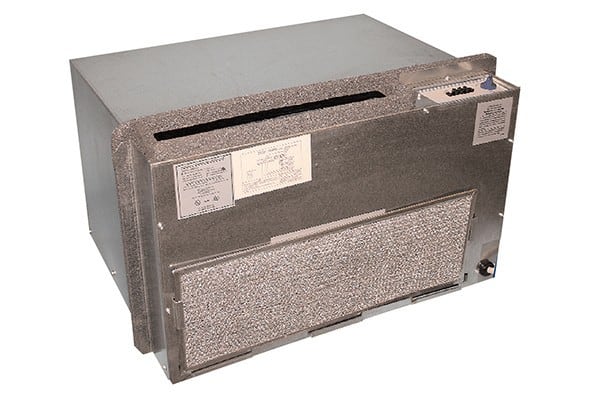
For Nassau County homeowners dealing with a PTAC unit, common in co-ops and condominiums in Great Neck and Long Beach, it’s worth knowing that not every HVAC contractor services PTACs. These are specialty systems, and a general HVAC technician who doesn’t work on them regularly may misdiagnose the problem or decline the job. We’ve built our entire reputation in this market around PTAC expertise, a gap most of our competitors can’t fill.
Should You Repair Or Replace Your Nassau County Heating System?
Emergency Heating Repair On Long Island: What To Do When The Heat Goes Out
It happens more often than it should, as a Nassau County homeowner wakes up on a January morning to a cold house, calls around, and finds out the earliest available appointment is three days away. During a cold snap, when HVAC emergency calls spike sharply across the region, that’s not an unusual response from an overwhelmed contractor. It’s also a situation that’s largely avoidable.
If you’re already in it, here’s the practical reality: if you have a no-heat emergency, call first rather than filling out a web form. A phone call gets you a faster response. When you call, be specific about what you’re experiencing by describing symptoms, providing the age and type of system if known, and asking directly about same-day availability.
For heating system issues in Nassau County that aren’t full emergencies, like heat running poorly or noticing earlier warning signs, the best window to act is before the season peaks. September and October are when appointment availability is highest and when you’re not competing with every other homeowner on the island who waited too long. Pre-season maintenance costs less than emergency repair and dramatically reduces the odds of a breakdown when the temperature matters.
All of our work comes with a one-year guarantee on parts and labor. We’re fully licensed and insured, and we’ve been operating out of Long Island City since before most of our competitors existed. If your system is giving you any of the signals described in this post, the time to deal with it is now, not when it’s 19 degrees and the heat won’t turn on.
Nassau County Heating Repair: Don't Let Winter Catch You Off Guard
The seven signs covered here aren’t worst-case scenarios. They’re the everyday symptoms Nassau County homeowners notice and set aside until they can’t anymore. Uneven heat, strange noises, rising energy bills, short cycling, a thermostat not matching the room, visible rust or moisture, and an aging system showing one or more of the above are all worth a call. Together, they’re a system telling you it’s close to the edge.
Nassau County winters are not forgiving. The South Shore wind chill, aging housing stock, and tight insulation in homes retrofitted decades ago add up to a market where a heating problem manageable in October becomes a genuine emergency by January.
Call Lion Enterprises of New York, LLC today at 718-433-4360 to schedule your heating inspection and protect your Nassau County home from unexpected winter breakdowns!