Summary:
Your heat just stopped working. It’s 28 degrees outside, tenants are calling every ten minutes, and you’re staring at a PTAC unit that’s blowing cold air when it should be keeping people warm.
Here’s what you need to know: in New York County, this isn’t just an inconvenience. It’s a legal issue that exposes you to daily fines. It’s a safety risk that puts vulnerable occupants in danger. And it’s a problem that gets exponentially more expensive the longer you wait.
You don’t need a general HVAC company that’s never worked with PTAC systems. You need specialists who’ve diagnosed this exact failure pattern hundreds of times and can fix it today, not next week. This page explains when to call for emergency heating help, what’s actually failing in your system, and how to get your building warm again without paying for someone’s learning curve.
What Actually Qualifies as a Heating Emergency
Not every heating hiccup requires a midnight service call. But certain situations demand immediate professional response, especially when you’re responsible for PTAC units in a New York County building.
A heating emergency typically means complete system failure when outdoor temperatures drop below 55 degrees. If your PTAC unit stops producing heat entirely, that’s urgent. If it’s blowing cold air when it should be warming the space, that’s urgent. If multiple units across your property have failed simultaneously, that’s definitely urgent.
The distinction matters because emergency heating situations in NYC carry serious legal weight. Property owners must maintain indoor temperatures at 68°F during daytime hours and 62°F overnight from October 1 through May 31. Falling short isn’t just uncomfortable—it triggers violations, daily fines up to $1,000 per unit, and potential legal action from both the city and your tenants.
When Your PTAC System Stops Producing Heat Completely
Complete heat loss from a PTAC unit usually points to one of several specific failures. The actuator—a small component controlling whether hot water or steam flows through your heating coils—fails in roughly 95% of cases where a unit won’t blow hot air. When this component stops working, your PTAC can’t access its heat source even though everything else appears functional.
You might also be dealing with a tripped circuit breaker, failed thermostat, broken heating element, or compressor issues. The challenge with PTAC systems is that they’re self-contained units. The problem is localized to that specific unit, but it also means you need someone who actually understands these through-wall systems inside and out.
Generic HVAC companies often misdiagnose PTAC issues because they’re trained on central heating systems. They’ll waste time checking components that don’t apply to through-wall units. Or they’ll recommend complete replacements when a $200 actuator swap would solve the problem. That’s the difference between PTAC specialists and general contractors—we recognize the failure patterns specific to these systems.
If your building uses PTAC units and one or more have stopped producing heat entirely, you’re looking at an emergency that needs immediate assessment. The longer you wait, the colder your spaces become, the more complaints you’ll receive, and the higher your risk of frozen pipes causing thousands in water damage.
Don’t attempt complex PTAC repairs yourself during a heating emergency. These units combine electrical components, heating elements, and sometimes gas connections that require proper training to service safely. What seems like a straightforward fix can quickly become a fire hazard or create carbon monoxide risks if handled incorrectly.
PTAC emergency situations also escalate faster than central system failures. With central heat, the temperature might drop gradually across your building. With PTAC failures, specific rooms go completely cold while others maintain temperature. For hotels, that means immediate guest complaints and potential refunds. For apartment buildings, it means tenant violations and emergency repair orders from the city.
Recognizing Dangerous Heating System Failures That Can't Wait
Some heating emergencies cross from uncomfortable into genuinely dangerous territory. If you smell gas—that distinctive sulfur-like “rotten egg” odor—shut down your system immediately, evacuate the building, and call 911 before you call anyone for repairs. Natural gas leaks create explosion risks that don’t give you time to troubleshoot.
Burning smells require immediate attention but fall into different categories. A light dust smell when you first activate your heat for the season is normal and should disappear within 20-30 minutes. But if you’re getting a persistent burning odor, especially one that smells like melting plastic or electrical burning, you’ve got a serious problem. This usually indicates overheating motors or failing electrical components that can start fires.
Carbon monoxide represents the most insidious threat during heating emergencies. It’s completely colorless and odorless, which is why carbon monoxide detectors are legally required in residential buildings. If your detector goes off, treat it as the life-threatening emergency it is—get everyone out immediately, call emergency services, and don’t re-enter until authorities clear the space.
Fuel-burning heating systems can leak carbon monoxide when combustion is incomplete, often caused by cracked heat exchangers, faulty burners, or blocked venting. These failures happen gradually, which is why regular maintenance matters. But during a heating emergency when systems are running at maximum capacity, existing cracks or faults can worsen rapidly.
Water pooling around your PTAC unit or furnace signals serious internal failures. PTAC systems in New York County face unique environmental stress—urban dust, temperature extremes, building vibrations from traffic and subways. All of this can loosen components and create leaks over time. What starts as a small puddle can quickly damage floors, walls, and the unit itself while creating mold conditions.
Strange mechanical noises—banging, grinding, screeching, rattling—mean components are actively failing. A grinding sound typically indicates motor bearing problems. Banging points to loose internal parts or ductwork issues. Screeching often means belt or bearing failures. These aren’t sounds you monitor and hope improve. They’re your system announcing that something is breaking right now and will fail completely soon.
Electrical issues like flickering lights when your heating system cycles on, or circuit breakers that trip repeatedly, indicate dangerous wiring problems or circuit overloads. These can lead to electrical fires if left unaddressed. If your heating system is causing electrical problems elsewhere in your building, that’s an emergency requiring immediate professional attention.
Emergency Heating and Cooling Response in Nassau County
Nassau County properties, particularly in areas like Hicksville and surrounding communities, rely heavily on PTAC systems for individual room climate control. When these units fail during extreme weather, response time becomes the difference between a quick fix and a property-wide crisis.
The problem with most emergency heating calls is that HVAC companies treat them as generic furnace repairs. They arrive without PTAC-specific parts, spend billable time diagnosing systems they’re unfamiliar with, and often recommend full replacements because they don’t know how to repair the actual problem. That approach costs you more money and extends your downtime significantly.
We stock the components that fail most frequently in this region. We understand how Nassau County’s weather patterns—from humid summers to freezing winters—affect system performance throughout the year. We know which repairs actually last and which ones just delay the inevitable next breakdown.
Why PTAC Units Fail Differently Than Central Heating Systems
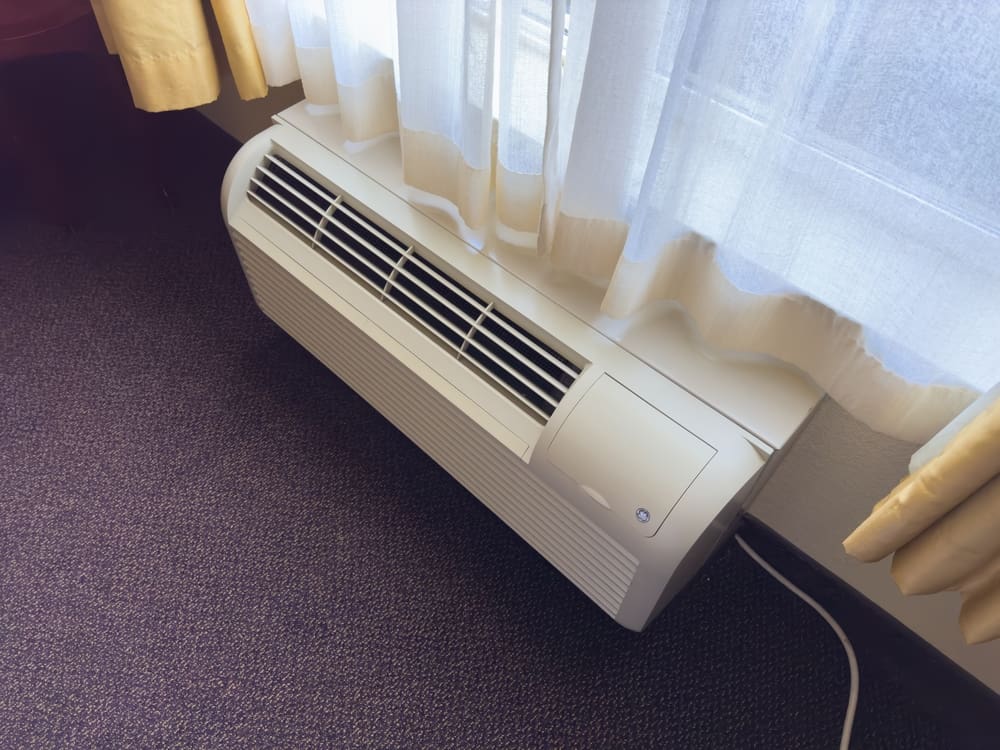
PTAC units are self-contained through-wall systems that handle both heating and cooling in a single packaged unit. When something fails, the entire climate control for that room or space stops working. There’s no central furnace providing partial backup or distributing heat from functioning zones.
This creates fundamentally different emergency scenarios than central system failures. With central heat, you might lose warmth gradually across the building as the system struggles. With PTAC failures, specific rooms or units go completely cold while adjacent spaces maintain comfortable temperatures. For hotels, that means immediate guest complaints, room moves, and potential refunds. For apartment buildings, it means tenant violations, emergency repair orders from HPD, and daily fines.
The components that fail in PTAC units are also different from residential furnaces or commercial boilers. You’re dealing with actuators controlling steam or hot water flow, through-wall condensers exposed to outdoor elements, compressors designed for packaged systems, and electrical connections specific to these installations. A technician who specializes in residential furnaces might never have worked with these components. They’ll be learning on your dime during your emergency.
PTAC systems in New York City face additional environmental stress that accelerates wear and failure. Urban dust and particulate matter from constant traffic clog filters and coils faster than in suburban settings. Building vibrations from nearby subways, construction, or heavy traffic loosen electrical connections and mechanical components over time. Temperature extremes—from 95-degree summer heat to sub-zero winter cold—create constant expansion and contraction that stresses seals and connections.
All of this means PTAC failures in NYC happen differently, happen more frequently, and require different expertise to repair properly. During a heating emergency, you need technicians who’ve seen these specific failure patterns hundreds of times across thousands of units, not someone consulting a manual while your building gets colder.
The other critical difference is parts availability. PTAC systems use specialized components that general HVAC supply houses don’t stock. If your emergency repair technician doesn’t have the right actuator, control board, or heating element on their truck, you’re looking at additional delays while they source parts. We carry the parts that fail most often because we work with these systems exclusively.
What to Do While Waiting for Emergency Heating Repair
Once you’ve called for emergency HVAC service, there are specific steps you can take while waiting for technicians to arrive. These won’t fix the underlying problem, but they can help minimize damage, keep occupants safer, and potentially speed up the repair process.
Check your thermostat settings first. Confirm it’s actually calling for heat and set to a temperature at least 5 degrees above the current room temperature. Make sure it’s in “heat” mode, not “cool” or “off.” It sounds basic, but thermostat issues account for a surprising number of emergency calls that turn out to be simple setting problems. If your thermostat uses batteries, try replacing them—weak batteries can prevent proper system communication.
Inspect your air filter if you can access it safely without opening the PTAC unit’s main housing. A completely clogged filter can restrict airflow enough to cause automatic safety shutdowns or severely reduced heating performance. If the filter looks dark, clogged, or hasn’t been changed in months, replacing it might help—though it won’t solve deeper mechanical or electrical failures.
Make sure nothing is physically blocking the PTAC unit. Furniture pushed directly against the unit, heavy curtains covering the vents, storage boxes stacked nearby, or other obstructions interfere with airflow and can cause the system to overheat and shut down. Clear at least two feet of space around the unit if possible, especially around air intake and discharge areas.
If you’re managing a multi-unit property and multiple PTAC systems have failed, look for patterns. Are all the failures on one floor? One side of the building? Connected to the same electrical circuit or steam line? This information helps technicians diagnose whether you’re dealing with individual unit failures or a building-wide issue affecting multiple systems. That distinction changes both the diagnosis and the repair approach.
Check your circuit breakers. If the breaker for your PTAC unit has tripped, you can try resetting it once. If it trips again immediately, don’t keep resetting it—that indicates a serious electrical problem that needs professional attention. Repeatedly resetting a tripping breaker can cause electrical fires or damage to the system.
Document what you’re experiencing. Note when the heat stopped working, what you were doing when it failed, any unusual sounds or smells, and how the system is behaving now. This information helps technicians diagnose the problem faster when they arrive, which means faster repairs and lower labor costs.
Don’t attempt to open the PTAC unit housing or perform internal repairs yourself during an emergency. These systems involve both high-voltage electrical components and heating elements that can cause serious burns or electrocution if handled incorrectly. What might seem like a simple fix—tightening a loose wire, replacing a fuse—can create bigger problems, safety hazards, or void warranties if done wrong.
Keep vulnerable occupants warm through safe temporary means. Elderly residents, young children, and anyone with medical conditions face the highest risk during heating failures. Space heaters can provide temporary warmth, but use them carefully—keep them at least three feet from flammable materials, don’t overload electrical circuits, never use extension cords, and never leave them unattended. Better yet, relocate vulnerable occupants to heated spaces until repairs are complete.
Getting Fast, Reliable Emergency Heating Repair
When your heating fails at 2 AM on the coldest night of winter, the last thing you need is a technician who’s never worked with PTAC systems before. You need someone who can diagnose the problem in minutes, not hours. Someone who carries the right parts on their truck. Someone who’s fixed this exact issue dozens of times and knows exactly what works.
We understand these systems aren’t just smaller versions of central HVAC. They’re engineered differently, they fail differently, and they require different diagnostic and repair approaches. That expertise matters most during heating emergencies when every minute without heat increases your legal liability, tenant complaints, and risk of secondary damage like frozen pipes.
The right emergency heating and cooling service gets your system running again the same day, backs that work with a genuine warranty, and charges you fairly without inflated “emergency” pricing designed to exploit your crisis. That’s what you should expect when dealing with a heating emergency in New York County—not guesswork, not delays waiting for parts, not someone learning PTAC systems on your time. If you’re facing a PTAC heating emergency and need immediate help from specialists who’ve been doing this for over 50 years, contact Lion-Air Enterprises.