Summary:
When your AC stops working in the middle of a New York summer, you need answers fast. But before you call the first HVAC company you find, there’s something you should know: not all AC repair is created equal. Commercial systems operate on a completely different scale than residential units, and the contractor who services your home might not have the training to handle your business property. Understanding these differences doesn’t just save you time—it protects you from costly mistakes, repeat service calls, and the kind of downtime that affects your bottom line. Here’s what actually separates commercial AC repair from residential service, and why it matters more than you think.
What Makes Commercial AC Repair Different From Residential Service
The gap between commercial and residential AC repair isn’t just about size. Yes, commercial systems are bigger, but the real difference runs deeper. Commercial HVAC systems are built to handle multiple floors, varying occupancy loads, and continuous operation during business hours. They’re modular, interconnected, and designed with redundancy in mind.
Residential systems, on the other hand, are standalone units designed for predictable use patterns. Your home AC cools a defined space with consistent occupancy. A commercial system has to adapt to conference rooms that fill and empty, server rooms that generate constant heat, and building areas with wildly different temperature needs.
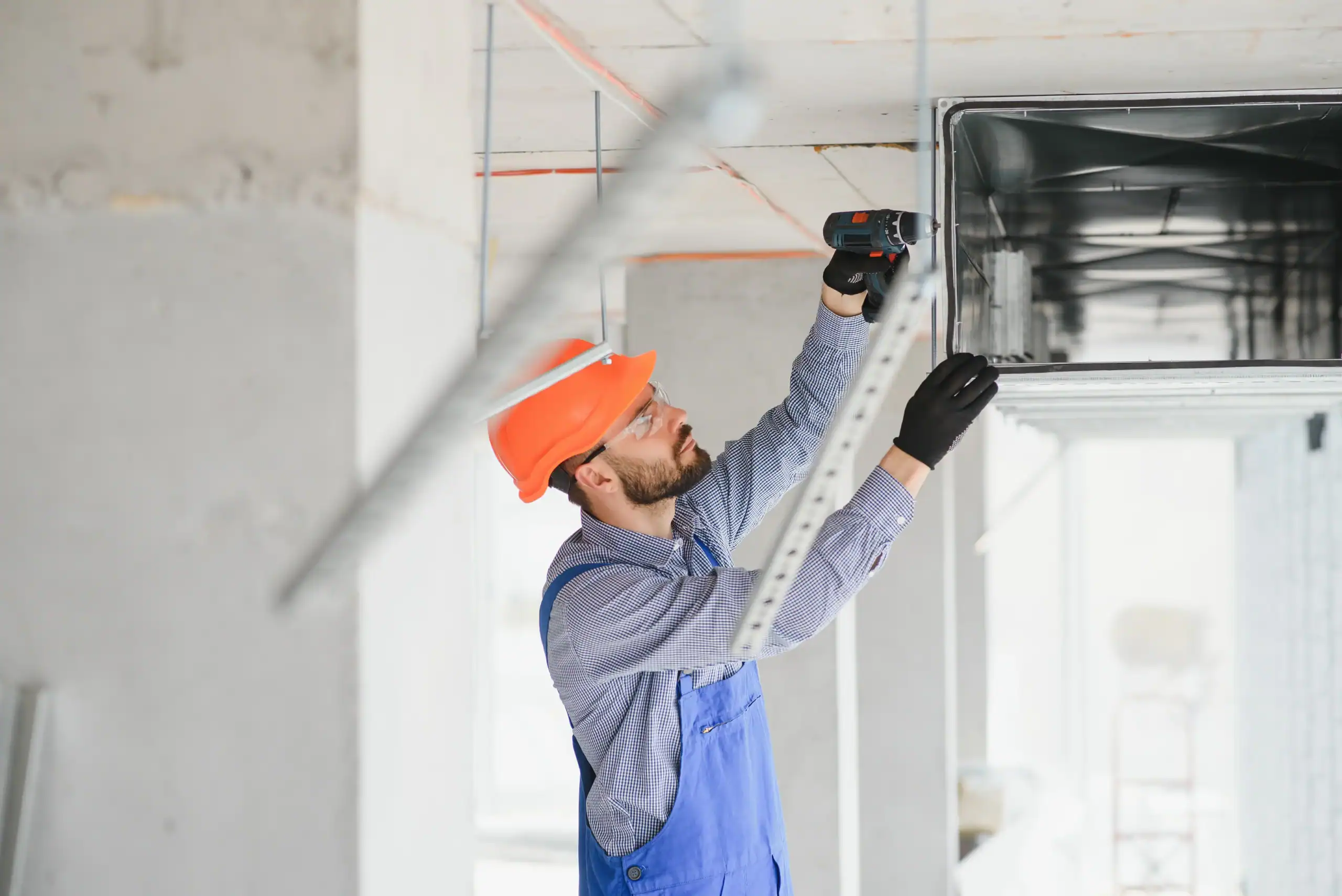
This complexity means commercial AC repair requires specialized training. Technicians need to understand zoning controls, multiple thermostats, rooftop installations, and how building systems interact. In New York County, where many commercial units sit on rooftops and residential units are ground-level or through-wall PTACs, even the physical access differs dramatically.
Why Commercial Systems Need More Specialized Training
Walk into any HVAC training program and you’ll find that commercial certification requires significantly more education than residential. There’s a reason for that. Commercial systems involve components that simply don’t exist in home setups: multiple compressors, complex ductwork serving different zones, sophisticated controls that manage airflow across thousands of square feet, and integration with building management systems.
When a commercial AC fails, the diagnostic process is more involved. You’re not just checking a single compressor or thermostat. You’re troubleshooting interconnected systems where a problem in one zone might stem from an issue three floors away. Commercial technicians need to read blueprints, understand load calculations for varying occupancy, and know how to service equipment while minimizing disruption to business operations.
In residential settings, the diagnostic path is more straightforward. The system is smaller, the components are fewer, and the variables are limited. A residential technician can typically diagnose and repair an issue in a single visit. Commercial repairs often require multiple assessments, coordination with building management, and sometimes even engineering consultations.
This is why calling a residential contractor for commercial work rarely ends well. They might fix the immediate symptom, but without understanding the broader system architecture, you’re likely looking at repeat failures. And in a commercial environment where downtime means lost revenue, that’s not acceptable.
The training gap shows up in real-world scenarios constantly. A residential tech might replace a faulty component without understanding how it affects the building’s overall HVAC balance. A commercial specialist knows that every adjustment in one area impacts the entire system. That’s the difference between a temporary patch and a lasting solution.
For businesses in Manhattan, Brooklyn, and across the tri-state area, this specialized knowledge isn’t optional. Your commercial property deserves technicians who understand commercial systems inside and out. Anything less is a gamble with your comfort, your budget, and your business continuity.
Response Time and Service Hour Differences
Here’s something most property managers learn the hard way: commercial and residential HVAC contractors often work completely different schedules. Residential services typically offer evening and weekend emergency calls because that’s when homeowners are available and when failures cause the most distress. You’ll find residential companies advertising 24/7 emergency service, ready to rush out at 2 AM when a family’s AC dies during a heatwave.
Commercial service follows a different rhythm. Most commercial HVAC work happens during standard business hours. Why? Because commercial systems are larger, more complex, and often require multiple technicians, specialized equipment, and coordination with building management. You can’t just show up at midnight and start working on a rooftop unit in Midtown Manhattan without permits, building access, and proper scheduling.
This doesn’t mean commercial properties are left in the cold—or heat. It means the approach is different. Commercial contracts often include preventive maintenance schedules designed to catch problems before they become emergencies. The goal is to avoid 3 AM failures entirely through regular service and monitoring.
When commercial emergencies do happen, the response involves more logistics. Rooftop access requires coordination. Parts for commercial systems aren’t always stocked locally and may need ordering. In NYC, you might need crane access for equipment replacement, which requires permits and street closures. These aren’t obstacles you face with a residential window unit or split system.
The service timeline reflects this complexity. A residential AC repair might be completed in a few hours. Commercial repairs can take days, especially if they involve major components or require parts fabrication. Smart commercial property managers build relationships with HVAC contractors before emergencies strike, ensuring they have priority service when issues arise.
For businesses that can’t afford downtime, this means planning ahead. Preventive maintenance contracts, backup systems for critical areas, and established relationships with qualified commercial HVAC specialists aren’t luxuries—they’re necessities. The cost of prevention is always lower than the cost of emergency repairs during peak business hours.
Commercial Air Conditioner Repair: System Complexity and Costs
Let’s talk about what commercial air conditioner repair actually costs, because the numbers tell an important story. In New York County, residential HVAC repairs typically run between $100 and $200 for minor fixes, with total system replacement ranging from $4,000 to $15,000. Commercial work operates on a completely different scale: repairs start higher and replacements can run anywhere from $8,000 to $80,000 or more, depending on the building size and system complexity.
These aren’t arbitrary price differences. They reflect the reality of what’s involved. Commercial systems have more components, require more labor hours, and use commercial-grade parts that cost more than residential equivalents. A commercial compressor replacement isn’t just bigger—it’s built to different standards for continuous operation and higher capacity demands.
Manhattan projects add another 10 to 20 percent to costs compared to Brooklyn or Queens. Tighter street access, stricter building management requirements, and premium labor rates for licensed NYC technicians all factor in. When your commercial unit sits on a rooftop and requires crane access, you’re looking at $2,000 to $5,000 just for the crane day, before any actual HVAC work begins.
Central Air Conditioner Repair for Large Properties
Central air conditioner repair sits in an interesting middle ground. Large residential properties and smaller commercial spaces both use central air systems, but the approach to servicing them differs based on usage patterns and system design. A large residential property might have a central air system serving 5,000 square feet, while a commercial property of the same size has entirely different cooling demands.
The difference comes down to load variability. Residential central air operates on predictable patterns—cooler at night, warmer during work hours, adjusted for seasonal changes. Commercial central air has to handle conference rooms that go from empty to packed with 50 people generating body heat, server rooms with constant thermal loads, and retail spaces where doors open and close hundreds of times daily.
This affects how repairs are approached. Residential central air repair focuses on the core components: compressor, evaporator coil, condenser, and ductwork. The system is sized for the space and operates as a single unit. Commercial central air repair has to account for zoning systems, multiple air handlers, variable air volume controls, and integration with building automation systems.
When you’re dealing with central air in a commercial setting, maintenance becomes more critical. These systems run longer hours and handle more stress than residential units. A residential system might operate 8 hours a day during summer. A commercial system in a Manhattan office building could run 12 to 16 hours daily, year-round. That’s double the wear and tear, which means more frequent service needs.
Ductwork inspection and maintenance also differ. Residential ductwork is relatively simple—main trunk lines branching to individual rooms. Commercial ductwork is a complex network serving multiple zones, each with its own dampers and controls. A leak or blockage in commercial ductwork doesn’t just reduce efficiency; it can throw off the entire building’s climate balance.
For property owners in New York County dealing with central air systems, the key question isn’t just “Does it work?” but “Is it working efficiently for my specific use case?” A system that’s adequate for residential use might be undersized for commercial demands, leading to constant cycling, excessive wear, and premature failure. Getting the right assessment from contractors who understand both residential and commercial central air applications makes all the difference.
Understanding AC and Heating Repair Service Requirements
Most people think about AC repair in summer and heating repair in winter, but here’s what separates good HVAC contractors from mediocre ones: they think about your system year-round. AC and heating repair aren’t separate services—they’re two sides of the same climate control coin, especially in systems that handle both functions.
In New York County, where you need reliable heating in January and dependable cooling in July, having a contractor who handles both eliminates the hassle of managing multiple vendor relationships. But more importantly, it ensures someone understands how your entire HVAC system works as an integrated unit. Many modern systems, particularly heat pumps and packaged terminal air conditioners (PTACs), provide both heating and cooling from the same equipment.
Commercial properties especially benefit from comprehensive AC and heating repair services. When you’re managing an office building, retail space, or hotel, you can’t afford to have one contractor for cooling issues and another for heating problems. You need a single team that understands your building’s complete HVAC infrastructure and can diagnose issues that might affect both heating and cooling performance.
The seasonal transition periods—spring and fall—are when integrated AC and heating expertise really matters. During these months, buildings might need cooling during the day and heating at night. Systems that handle both functions need to switch modes seamlessly. When problems arise during these transitions, you need technicians who understand both the cooling and heating sides of the equation.
Preventive maintenance for AC and heating systems should happen on a coordinated schedule. Commercial systems benefit from twice-yearly service: once before cooling season and once before heating season. This proactive approach catches problems before they cause downtime. Residential systems can often get by with annual service, but the same principle applies—check the whole system, not just one function.
For businesses and property owners throughout the tri-state area, choosing contractors with comprehensive AC and heating repair capabilities isn’t just convenient. It’s strategic. You’re building a relationship with a team that knows your equipment, understands your building’s specific needs, and can respond quickly whether the problem is frozen pipes in February or a failed compressor in August.
The best HVAC contractors don’t just fix what’s broken. They help you understand your system’s lifecycle, plan for eventual replacement, and make smart decisions about repair versus replacement. That kind of guidance only comes from contractors who see the complete picture—heating, cooling, and everything in between.
Choosing the Right AC Repair Service for Your Needs
The difference between commercial and residential AC repair isn’t just technical—it’s about matching the right expertise to your specific situation. Commercial systems demand specialized training, different service approaches, and contractors who understand the stakes when business operations depend on climate control. Residential systems need reliable service but operate on a simpler scale with different priorities.
For property owners and managers in New York County and across the tri-state area, the smart move is working with HVAC contractors who can handle both worlds. Whether you’re dealing with a PTAC unit in a Manhattan hotel, central air in a Nassau County office building, or residential cooling in Queens, you need contractors who understand the specific requirements of your system type.
The key is asking the right questions before problems arise. Does the contractor have commercial certification if you need commercial service? Do they understand PTAC systems if that’s what your building uses? Can they handle both heating and cooling repair? Are they licensed and insured for work in New York County? Do they guarantee their work?
At Lion-Air Enterprises, we specialize in exactly this type of comprehensive service, with expertise in both commercial and residential HVAC systems, PTAC specialization as the parent company of three industry-leading brands (Accumtemp, Lion-Aire, and Spectrum), and a one-year guarantee on all our work. For properties throughout NYC and the tri-state area, that combination of capabilities and commitment makes all the difference when your climate control systems need attention.