Summary:
Your PTAC unit stopped working, and suddenly you’re dealing with uncomfortable tenants, unhappy hotel guests, or a freezing apartment in the middle of winter. You need it fixed fast, but you also need it fixed right. The challenge is that PTAC units aren’t standard air conditioners. They’re specialized systems with unique components, and not every HVAC technician knows how to properly diagnose and repair them. This matters because the wrong repair approach can cost you hundreds in unnecessary parts or leave you with the same problem weeks later. Here’s what you actually need to know about PTAC unit repair and how to get your system running efficiently again.
PTAC Unit Repair: Understanding These Specialized Cooling Systems
PTAC stands for Packaged Terminal Air Conditioner, and if you’ve stayed in a hotel or live in a New York apartment building, you’ve probably used one. These are the self-contained units mounted through walls that provide both heating and cooling for individual rooms.
What makes them different from window units or central air is that everything you need sits in one chassis. The compressor, evaporator coils, condenser coils, fan, and heating elements all work together in that single box. They’re designed for commercial and residential buildings where individual room control matters more than whole-building climate systems.
In New York County and throughout the tri-state area, PTAC units face challenges that accelerate wear and tear. Urban dust clogs filters faster. Temperature extremes stress components. Building vibrations loosen connections over time. These aren’t problems you’ll read about in a standard HVAC manual, but they’re exactly what causes most PTAC failures in this market.
PTAC Repair vs Regular AC Repair: Why the Difference Matters
You might think any HVAC technician can handle PTAC repair, but that assumption costs property owners money every day. PTAC units are modular systems where components can be removed, cleaned, or replaced individually. This design makes them serviceable in ways that window units aren’t, but it also means repair approaches differ significantly.
The control board in a PTAC unit is the system’s brain. When it fails, the entire unit stops working. These boards typically malfunction with age rather than from a specific failure event. Electronic components break down before mechanical ones, which is why you might see a control board fail while the compressor still has years of life left.
A general HVAC tech might miss this. They’ll test the compressor, check refrigerant levels, and tell you the whole unit needs replacement. A PTAC specialist knows to check the control board first, potentially saving you from an unnecessary $2,000 replacement when a $300 repair would solve the problem.
The heating components present another specialization area. Many PTAC units in New York buildings connect to the building’s hot water or steam system through actuators. These small devices control water or steam flow through heating coils. When an actuator fails, you get cold air instead of heat, but the cooling system might work perfectly fine.
Some companies charge $400 to $800 for actuator replacement during winter emergencies. The actual repair is straightforward and shouldn’t cost anywhere near that amount. But if you don’t know what you’re looking at, you’re vulnerable to inflated pricing during the exact moment you need heat most.
PTAC units also have drainage systems that differ from standard air conditioners. Water leaks often come from clogged drain lines or pans, but the positioning of these components within the wall sleeve makes diagnosis trickier. You need to understand how the unit sits in the sleeve, how it should be angled for proper drainage, and what happens when building settlement changes that angle over years.
PTAC AC Repair: Common Issues and What They Actually Mean
When your PTAC unit starts acting up, the symptoms tell a story. Grinding or scraping noises usually point to fan or motor issues. The fan blades might be hitting something, or the motor bearings are wearing out. These problems escalate quickly. What starts as an annoying sound becomes a seized motor that requires full replacement instead of a simple bearing service.
Clicking or rattling noises often indicate loose components. Screws work loose over time, especially in units that see heavy use or sit in buildings with subway vibrations or heavy truck traffic. Sometimes it’s as simple as tightening connections. Other times it signals that internal parts are beginning to fail and need replacement before they cause secondary damage.
If your unit isn’t cooling properly, the issue could be a dirty evaporator coil, low refrigerant, a failed capacitor, or a stuck reversing valve. Each of these has different repair costs and different urgency levels. A dirty coil just needs cleaning. Low refrigerant means you have a leak that needs finding and fixing before recharging the system. A failed capacitor is a common, affordable fix. A stuck reversing valve might mean it’s time to evaluate whether repair or replacement makes more financial sense.
Water dripping from the front face happens when drain holes get blocked, the sleeve angle is incorrect, the drain pan cracks, or the coil freezes and then thaws. These are all repairable issues, but they require actually looking at the unit, not just running through a standard diagnostic checklist.
No heat during winter often comes down to that actuator we mentioned earlier. But it could also be a failed reversing valve, a dead electric heat strip, a blown capacitor, or a control board fault. Each requires different parts and different labor, which is why phone quotes for PTAC repair are essentially meaningless. You need someone who will actually diagnose the specific problem your unit is having.
The challenge with PTAC repair is that symptoms overlap. A unit that’s not cooling could have five different root causes. A unit that’s making noise could have three different failing components. This is where specialization matters. Someone who works on PTAC units regularly recognizes patterns. They know which failures are common in which brands and models. They know what typically fails first and what that failure causes downstream.
PTAC Repair Services: What Professional Diagnosis Actually Includes
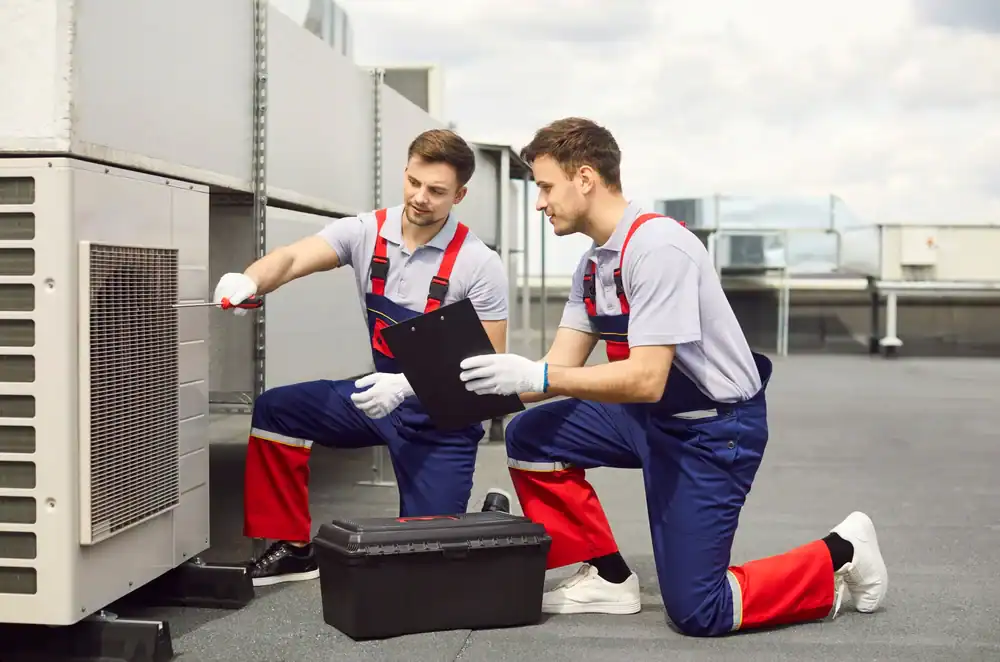
Professional PTAC repair starts with comprehensive diagnosis, not assumptions based on symptoms. A technician should inspect the entire system, not just the component you think is broken.
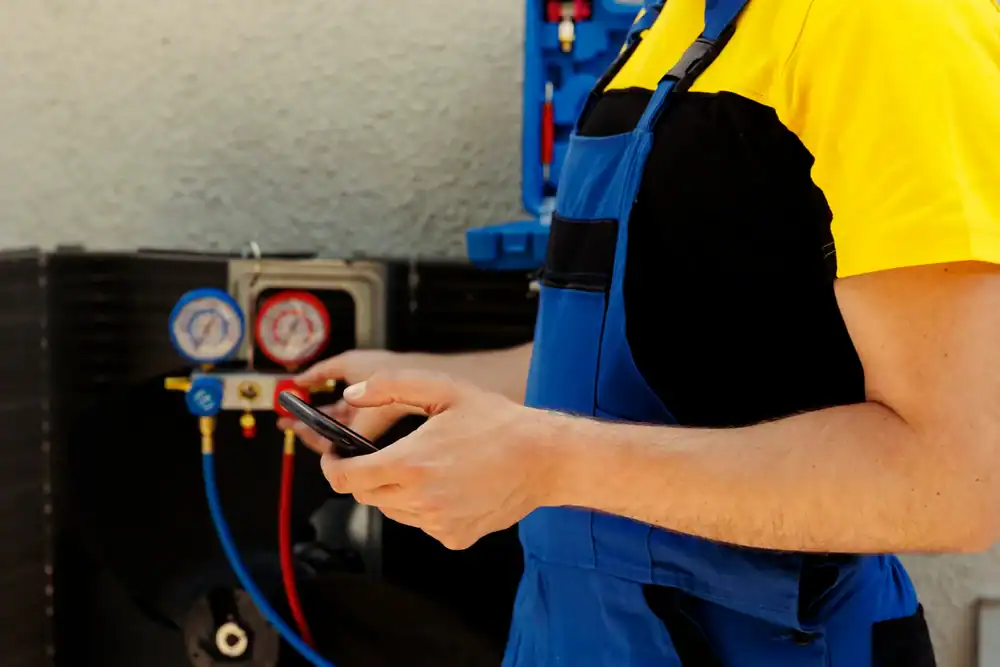
This includes cleaning coils, checking filters, testing electrical connections, and ensuring proper drainage. It means looking at refrigerant levels, testing the compressor function, checking the reversing valve operation, and verifying that the control board is sending correct signals to all components.
In New York County properties, technicians should also check for issues specific to urban environments. Is urban dust clogging the system faster than normal? Are building vibrations causing connections to loosen? Is hard water creating mineral deposits that affect heat transfer? These aren’t standard checklist items, but they’re exactly what causes premature failures in this market.
PTAC Unit Replacement vs Repair: Making the Right Call
PTAC units typically last 7 to 15 years depending on usage, maintenance, and environmental factors. When yours starts having problems, you face a decision: repair or replace?
The general rule is that if repair costs exceed 50% of replacement cost, replacement makes more financial sense. But that calculation only works if you’re getting accurate repair quotes and realistic replacement estimates.
A failed compressor might cost $500 to $1,100 to replace. If your unit is 12 years old and has had multiple repairs already, that money might be better spent on a new unit with modern efficiency standards. But if your unit is 5 years old and the compressor is the only issue, repair makes perfect sense.
Control board failures are similar. The board itself might cost $200 to $400 installed. If that’s your only issue and the unit is otherwise functioning well, repair is the obvious choice. But if you’re also dealing with refrigerant leaks, a failing fan motor, and corroded electrical connections, you’re looking at stacking multiple repairs on an aging system.
New PTAC models offer 20-30% better energy efficiency than units from even 10 years ago. If your current unit is struggling to maintain temperature and driving up electricity bills, the energy savings from a new unit might justify replacement even if the old unit is technically repairable.
The decision gets more complex in multi-unit buildings. If you’re replacing one unit, do you replace all units of the same age to avoid sequential failures? Do you standardize on one model to simplify future parts inventory? These are property management considerations that go beyond simple repair-or-replace math.
Location matters too. A PTAC unit that’s easily accessible might be worth repairing even for moderate issues. A unit that requires scaffolding or special access to service might justify replacement to avoid those access costs on future repairs.
PTAC Air Conditioner Repair Costs and What Affects Pricing
Most PTAC repairs in New York City range from $150 to $400, depending on the specific problem and which components need replacement. Simple issues like actuator problems or filter replacements fall on the lower end. Compressor replacement or major electrical work costs more.
Diagnostic visits typically cost $100 to $175. Some companies waive this fee if you proceed with repairs, but make sure you understand their policy upfront. A diagnostic fee is reasonable. Hidden fees that appear after the work is done are not.
Capacitor replacement, the most common PTAC repair, runs $150 to $300. Fan motor replacement costs $250 to $500. Refrigerant leak repair and recharge typically runs $300 to $650. These are parts-and-labor prices for standard repairs done during normal business hours.
Emergency service, especially during temperature extremes, often carries premium pricing. This is standard across the HVAC industry, but the premium should be reasonable. A 20-30% upcharge for after-hours emergency service makes sense. Doubling or tripling the price does not.
Brand and model affect repair costs too. Premium or older PTAC models often require specialized parts that are harder to source, increasing both repair time and overall cost. Common brands with readily available parts keep costs down.
Labor costs in New York City run higher than in other regions. Skilled HVAC technicians command premium rates because of demand and living expenses. This is reality, not price gouging. But it also means you should expect detailed explanations of what work is being done and why it’s necessary.
The key to fair pricing is transparency. You should receive a written estimate before work begins. That estimate should detail which components are being replaced, what labor is involved, and what the total cost will be. No surprise charges should appear after the job is done.
Volume pricing matters for property managers. If you’re maintaining 10 or more PTAC units, many companies offer discounted rates for multiple-unit service contracts. This can significantly reduce per-unit maintenance costs while ensuring regular professional attention that prevents emergency repairs.
Getting Your PTAC Unit Repair Done Right in New York County
PTAC unit repair isn’t something you want to trust to just anyone with an HVAC license. These systems have unique components, failure patterns, and repair requirements that demand specialized knowledge.
The right repair approach starts with accurate diagnosis, not assumptions. It includes comprehensive system inspection, not just addressing the immediate symptom. It provides transparent pricing before work begins, not surprise charges after the fact.
When you’re dealing with PTAC issues in New York County properties, you need technicians who understand these systems specifically. We specialize in PTAC repair, service, and replacement throughout NYC and the tri-state area, with one-year guarantees on all work we perform.