Summary:
You’re tired of window units that rattle, leak, and barely cool half the room. You want real comfort—the kind where every room in your house stays cool without cranking five different AC units. But before you can enjoy that relief, you need to know what central air actually costs and why prices seem to be all over the map. The truth is, central AC installation on Long Island runs anywhere from $4,200 to $14,400, and that range exists for good reasons. Your home’s size, your existing ductwork situation, the system efficiency you choose, and even Nassau County’s permit requirements all play a role. Let’s break down exactly what you’re paying for and what affects your final number.
Central AC Installation Cost Breakdown for Long Island Homes
When you’re looking at quotes for central air, you’re not just buying a box that sits outside your house. You’re paying for equipment, skilled labor, permits, and sometimes ductwork modifications that make the whole system work correctly.
In Nassau County and across Long Island, most homeowners pay between $4,200 and $14,400 for a complete central AC installation. The average lands around $6,600, but your actual cost depends on several factors we’ll dig into. That price typically includes the outdoor condensing unit, the indoor evaporator coil, refrigerant lines, a thermostat, and professional installation with startup.
Labor costs in the Northeast run about 20% higher than the national average, which is why Long Island pricing sits above what you might see in other parts of the country. You’re also paying for experience—licensed HVAC technicians who understand local building codes, know how to handle Nassau County’s coastal humidity challenges, and won’t void your manufacturer’s warranty by cutting corners.
HVAC Installation Cost: Equipment and Labor
The equipment itself makes up a big chunk of your total cost. A quality central air conditioner with a decent SEER rating (Seasonal Energy Efficiency Ratio) typically runs between $2,500 and $4,500 for the unit alone. Higher efficiency models with SEER ratings above 16 cost more upfront but can qualify for utility rebates and lower your monthly electric bills.
Labor is where things get interesting. Professional installation isn’t just about hooking up a few wires and calling it done. We perform a Manual J load calculation to size your system correctly based on your home’s square footage, insulation, window placement, and layout. An oversized system short-cycles and wastes energy. An undersized system runs constantly and never quite gets your house comfortable.
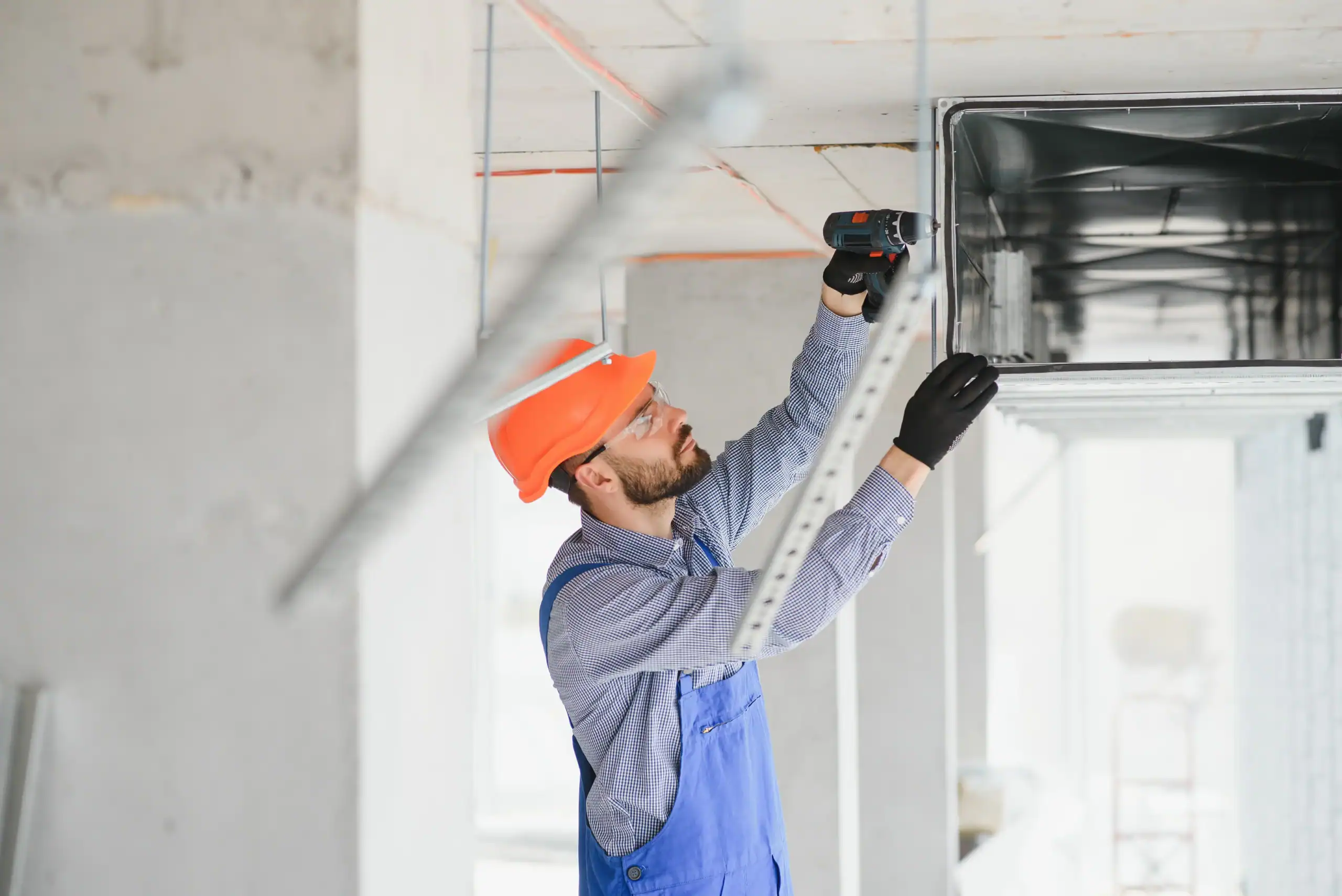
Installation labor in Nassau County typically adds $1,500 to $3,500 to your project, depending on complexity. If your outdoor unit needs to go on a second-story platform, if your electrical panel needs upgrading to handle the new load, or if your home’s layout makes ductwork access difficult, expect labor costs on the higher end. Accessibility matters—a cramped attic or tight crawl space means more time and effort for installers.
The good news? Quality installation pays off. A properly installed system lasts 15 to 20 years and operates efficiently throughout its lifespan. Rushed or inexperienced installation can lead to refrigerant leaks, poor airflow, and breakdowns that cost you more in repairs than you saved on cheap labor.
Air Conditioner Installation Cost: Ductwork Considerations
Here’s where your cost can swing dramatically. If your home already has ductwork from a forced-air heating system, you’re in good shape. We evaluate whether your existing ducts are properly sized, sealed, and insulated for the new AC system. Minor modifications or sealing typically add $200 to $800 to your project.
But if your home doesn’t have ductwork—common in older Long Island homes with radiator heat or baseboard systems—you’re looking at a much bigger investment. Installing new ductwork costs between $2,100 and $4,000 for an average-sized home, though complex layouts or multi-story homes can push that to $5,600 or more.
Ductwork installation involves cutting into walls and ceilings to run metal or flexible ducts throughout your home. In a 1,000 to 2,500 square foot home, you’ll need roughly 150 linear feet of ductwork. Larger homes with 2,000 to 3,500 square feet might need 250 linear feet, and costs scale accordingly. The material matters too—rigid sheet metal ducts last longer and perform better than flexible ducts, but they cost more and take longer to install.
For homes without existing ductwork, ductless mini-split systems offer an alternative. These systems cost $3,000 to $5,000 per unit and don’t require any ductwork at all. You might need multiple units to cool your whole house, but installation is faster and less invasive than cutting ducts through finished walls.
Don’t skip the ductwork evaluation. Leaky or undersized ducts can waste 20% to 40% of your system’s cooling capacity, driving up energy bills and leaving rooms uncomfortable. A thorough inspection before installation helps you avoid surprises and ensures your new system performs as expected.
Cost to Install Central Air: Factors That Impact Your Investment
Not all central AC installations cost the same, even for similar-sized homes on the same street. Several factors push your final price up or down, and understanding them helps you budget accurately and make smart choices.
Your home’s size is the most obvious factor. A 1,500 square foot ranch needs less cooling capacity than a 3,000 square foot colonial. Systems are sized in tons (not weight, but cooling capacity), and most homes need anywhere from 2 to 5 tons. Bigger systems cost more—a 2-ton unit might run $8,000 to $12,000 installed, while a 5-ton system can hit $13,500 or more.
But size isn’t everything. Your home’s insulation, window quality, ceiling height, and even which direction it faces all affect how much cooling capacity you actually need. That’s why proper load calculations matter more than guessing based on square footage alone.
System Efficiency and Long-Term Operating Costs
System efficiency directly affects both your upfront cost and your monthly electric bills. SEER ratings measure how efficiently your AC converts electricity into cooling. The minimum SEER rating for new systems is 14, but high-efficiency models reach 20 or higher.
A 14 SEER system costs less upfront but uses more electricity to cool your home. A 20 SEER system costs $1,000 to $3,000 more initially but can cut your cooling costs by 30% to 50% compared to the minimum efficiency model. On Long Island, where electricity rates average around 23 cents per kilowatt-hour—well above the national average—that efficiency pays off faster than in cheaper energy markets.
Federal tax credits offer up to $2,000 for qualifying high-efficiency systems, and PSEG Long Island provides rebates up to $11,000 for heat pump installations through their Home Comfort Plus program. The NYS Clean Heat Program adds another $2,000 in potential rebates for qualifying heat pump systems. These incentives can offset the higher upfront cost of efficient equipment, making it more affordable to choose a system that saves you money every month.
Beyond SEER ratings, consider features like variable-speed compressors and multi-stage cooling. These technologies cost more but provide better humidity control—critical on humid Long Island summers—and run more quietly than single-stage systems. They also extend your equipment’s lifespan by reducing wear from constant on-off cycling.
Nassau County Permits and Building Code Compliance
You can’t just install a central AC system in Nassau County without proper permits. HVAC installations require both mechanical and electrical permits to ensure your new system meets current energy codes and safety standards. Permit fees typically range from $200 to $500 depending on your project’s scope and value, though complex installations can push fees higher.
The permit process takes time—expect 4 to 8 weeks for processing in Nassau County due to high application volumes. We handle permit applications, inspections, and code compliance as part of our service, and we include permit costs in our quotes so you’re not surprised later.
Nassau County requires multiple inspections throughout the installation process. You’ll need inspections after rough-in work, before covering ductwork, and a final inspection before the system can be used. Each inspection must pass before work continues, and only after final approval do you receive your certificate of completion.
Working with a contractor experienced in Nassau County’s requirements saves headaches. We know which municipalities require additional approvals, how to schedule inspections efficiently, and what documentation building departments expect. Trying to navigate this yourself or hiring someone unfamiliar with local codes can delay your project by weeks and potentially result in failed inspections that require expensive corrections.
Don’t forget about HOA approvals if you live in a community with a homeowners association. Many require written approval before you apply for municipal permits, adding another layer to the process. Plan ahead and factor these timelines into your project schedule, especially if you’re trying to get your system installed before summer heat arrives.
Making Your Central Air Installation Investment Count
Central AC installation is a significant investment, but it’s one that pays off in comfort, home value, and energy efficiency when done right. Understanding what drives costs—from equipment and labor to ductwork and permits—helps you budget accurately and avoid surprises.
The key is choosing a system sized correctly for your home, working with experienced installers who understand Nassau County’s requirements, and balancing upfront costs with long-term operating expenses. Don’t just chase the lowest quote. Look for contractors who perform proper load calculations, handle permits, and stand behind their work with solid warranties.
If you’re ready to explore your options for central air installation on Long Island, we bring decades of HVAC expertise to the tri-state area. Our team understands the unique challenges Long Island homeowners face, from coastal humidity to local building codes, and all our work comes with a one-year guarantee.