Summary:
You’re looking at your heating and cooling options, trying to figure out what makes sense for your space. Maybe your current system isn’t cutting it, or you’re planning a renovation and need to make a decision that’ll stick for the next decade. The choice between PTAC units and central air isn’t just about which one sounds better on paper—it’s about which one actually works for your building, your budget, and how you live. In New York, where older buildings dominate and ductwork is often nonexistent, this decision gets even more specific. Let’s walk through what you need to know about costs, installation, efficiency, and which system fits different situations.
PTAC Unit Cost vs Central Air Installation
The price difference between these two systems is significant, and it often becomes the deciding factor. PTAC units typically run between $1,750 and $3,600 per unit when you factor in equipment, installation, and electrical work. That’s for a complete setup in a single room.
Central air installation in New York ranges from $20,000 to $25,000 for a standard 1,500-square-foot apartment. Larger homes or brownstones can push that number to $75,000 when you include ductwork, mechanical systems, and the coordination required during major renovations. The gap isn’t small—industry estimates suggest going with PTACs could cost about 50 percent less than installing central air in most NYC properties.
What Drives PTAC Unit Cost
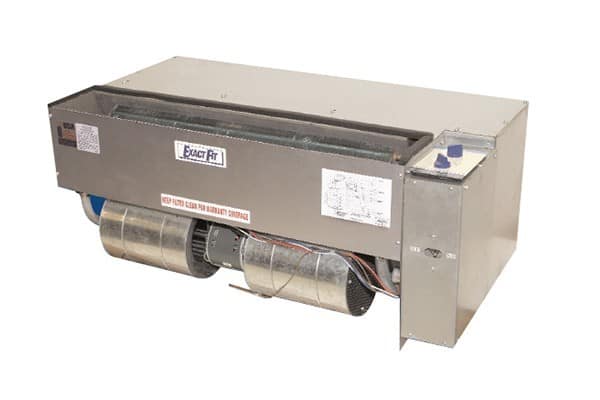
When you’re budgeting for a PTAC system, the unit itself is only part of the equation. Equipment costs range from $500 to $1,500 depending on capacity, brand, and whether you’re choosing a heat pump model or electric heat. Most residential and commercial spaces use 12,000 to 15,000 BTU units, which sit in the middle of that range.
Installation adds another layer. If you’re replacing an existing PTAC in a building that already has wall sleeves, the job is straightforward—slide the old unit out, slide the new one in. That’s a few hundred dollars in labor. But if you’re cutting through an exterior wall for the first time, expect to pay around $2,000 for the masonry work, framing, sleeve installation, and sealing. You’ll also need a dedicated electrical circuit, which can add $350 to $600 if your building isn’t already wired for it.
PTAC systems give you flexibility that central air can’t match. You’re not committing to cooling your entire property at once. Need climate control in three rooms? Install three units. Want to add another later? The infrastructure is simple enough that expansion doesn’t require rethinking your whole setup. This pay-as-you-go approach makes PTAC units accessible for property owners who can’t drop $20,000 upfront but still need reliable heating and cooling.
One often-overlooked cost advantage is replacement. PTAC units are designed to last 7 to 10 years with proper maintenance, and when it’s time to swap them out, the process is quick. The wall sleeve stays in place, and a new unit slides right in. Compare that to central air, where aging components might mean replacing an entire system or dealing with costly duct repairs, and the long-term cost picture starts to favor PTACs in many scenarios.
What You're Really Paying for with Central Air Cost
Central air conditioning systems require a much larger upfront investment, and most of that cost comes from installation complexity. The equipment itself—condenser, air handler, thermostat, refrigerant lines—runs between $4,200 and $14,400 depending on the size and efficiency rating. But in New York City, where most buildings weren’t designed with ductwork in mind, installation becomes the real expense.
Ductwork installation is invasive. It requires opening up ceilings and walls to run air distribution throughout your space. In a typical NYC apartment, that means coordinating with architects and general contractors, securing building permits, and often doing the work during a gut renovation or apartment combination. You’ll also need a mechanical closet or dedicated space to house the air handler, which many older apartments simply don’t have. All of this coordination and construction pushes the total project cost well into five figures.
There’s also the question of ceiling height. Ducted systems need at least nine feet of clearance to accommodate the ductwork and maintain proper airflow. Many pre-war buildings in Manhattan, Brooklyn, and Queens don’t meet that threshold, making central air impractical even if you have the budget. This is why central air is most common in newer luxury buildings or in properties undergoing major renovations where the infrastructure can be built from scratch.
Operating costs for central air can be lower per square foot if you’re cooling a large space efficiently, but there’s a catch—duct leaks. Studies show that central systems can lose up to 30 percent of their efficiency through poorly sealed or aging ductwork. That means you’re paying to cool air that never makes it to your living space. Regular duct maintenance helps, but it’s another ongoing expense that PTAC systems don’t require.
The financial commitment doesn’t end at installation. Central air systems are complex, with multiple components that need professional servicing. Annual tune-ups, refrigerant checks, and filter replacements add up. And if something goes wrong with the ductwork or the central unit, repairs tend to be more expensive than fixing a single PTAC unit. For property owners who want whole-home comfort and have the budget and building structure to support it, central air delivers. But for everyone else, the cost barrier is real.
Energy Efficiency: PTAC Systems vs Central Air
Energy efficiency isn’t just about saving money on your utility bill—it’s about how well a system delivers comfort relative to the power it consumes. PTAC units and central air systems measure efficiency differently, and understanding those metrics helps you predict what you’ll actually pay each month.
PTAC units use EER, or Energy Efficiency Ratio, which measures cooling output at a fixed outdoor temperature. Modern PTAC systems typically deliver EER ratings between 9 and 13. The higher the number, the less electricity the unit uses to cool the same space. A PTAC with an EER of 10 means it delivers 10 BTUs of cooling for every watt of electricity consumed. Central air systems, on the other hand, use SEER ratings, which account for seasonal performance across varying temperatures. High-efficiency central systems can achieve SEER ratings of 16 or higher, which sounds impressive—but the real-world efficiency depends heavily on duct integrity and system sizing.
PTAC Efficiency in Real-World Use
The efficiency of a PTAC unit comes down to how and where you use it. Because PTACs are self-contained and condition individual rooms, they avoid the energy losses that plague ducted systems. There’s no air traveling through walls and ceilings where leaks can siphon off cooling power. What the unit produces goes directly into the space you’re trying to condition.
Room-by-room control is another efficiency advantage. If you’re only using two rooms in your apartment during the day, you’re only running two PTAC units. Central air cools the entire space whether you’re using it or not. This zoning capability means you’re not wasting energy on unoccupied areas, which can translate to real savings depending on your habits and building layout.
Operating costs for a typical 14,700 BTU PTAC unit with a 10 EER rating run around $50 to $80 per month during heavy use, based on average electricity rates. That assumes you’re running the unit several hours a day in cooling or heating mode. Heat pump PTAC models are more efficient in moderate climates, using less energy to heat compared to electric resistance models. In New York’s variable climate, a heat pump PTAC can cut heating costs significantly during spring and fall, though you’ll still need the electric backup during deep winter cold snaps.
PTAC efficiency has improved dramatically over the past decade. Older units installed in the 1990s and early 2000s often had EER ratings below 8, making them energy hogs. If you’re replacing an aging PTAC with a modern unit rated at 10 or higher, you’ll notice the difference on your utility bill. Upgrading from an 8.5 EER unit to a 9.4 EER model cuts cooling energy use by about 10 percent, which adds up over months of operation.
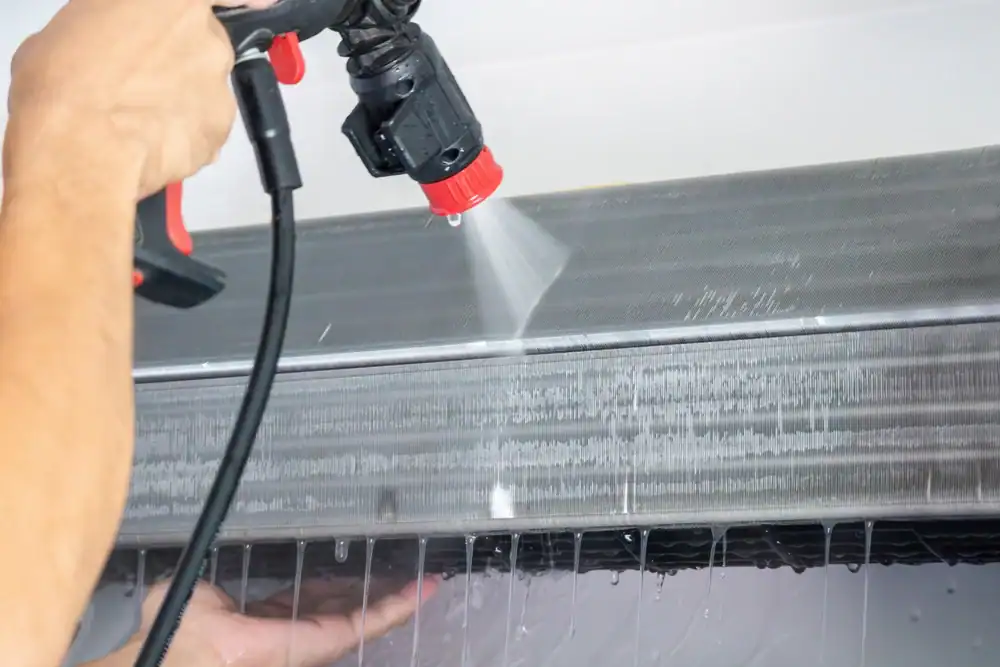
Maintenance plays a role too. A PTAC with clogged filters or dirty coils works harder to deliver the same cooling, driving up energy consumption. Monthly filter cleaning and annual professional servicing keep efficiency where it should be. The good news is that PTAC maintenance is straightforward—most of it you can do yourself, and professional deep cleaning is far less expensive than servicing a central air system with ductwork.
How Central Air Efficiency Stacks Up
Central air systems can be highly efficient when everything is working correctly. A modern central AC with a SEER rating of 16 or 18 uses less energy per BTU than most PTAC units, especially when cooling large, open spaces. The centralized approach means one high-efficiency compressor and air handler doing the work for your entire home, which can be more economical than running multiple smaller units.
But that efficiency is theoretical. In practice, central air performance depends on duct quality, system sizing, and how well the installation was executed. Leaky ducts are the biggest efficiency killer—air escaping through gaps and poorly sealed joints means your system is working harder than it should. Even a well-maintained central system can lose 20 to 30 percent of its cooling capacity to duct losses. Sealing and insulating ducts helps, but it’s an ongoing concern that PTAC systems simply don’t face.
System sizing matters too. An oversized central air unit will short-cycle, turning on and off frequently without running long enough to dehumidify the air properly. An undersized unit will run constantly and struggle to maintain temperature. Getting the sizing right requires a professional load calculation, and even then, changes to your space—new windows, insulation upgrades, layout modifications—can throw off the balance. PTAC units are easier to size because you’re matching capacity to individual rooms, not trying to balance airflow across an entire property.
Central air shines in larger homes and properties where whole-home comfort is the priority. If you have the ductwork in place and a well-designed system, the operating costs can be lower per square foot than running multiple PTAC units. But for NYC apartments, co-ops, and older buildings without existing ducts, the efficiency advantage of central air often gets lost in the complexity and cost of installation. You’re not just comparing equipment efficiency—you’re comparing the entire system, including all the infrastructure that makes it work.
Energy costs in New York are higher than the national average, with electricity running around $0.28 per kWh in some areas. That makes efficiency more important here than in other parts of the country. Whether you choose PTAC or central air, investing in a higher-efficiency model pays off faster when your per-kilowatt-hour cost is that high. Understanding which system fits your building and usage patterns matters more than chasing the highest efficiency number on paper.
Which Heating and Cooling System Fits Your Property
The choice between PTAC and central air comes down to your building, your budget, and what you’re trying to accomplish. PTAC units work best when you need individual room control, when ductwork isn’t feasible, or when upfront cost is a major factor. They’re the practical choice for most NYC apartments, older buildings, and multi-unit properties where zone control matters. Central air makes sense when you’re doing a gut renovation, when you have the space and ceiling height for ductwork, and when whole-home consistency is worth the investment.
Neither system is universally better—they solve different problems. If your building already has PTAC sleeves and you need reliable heating and cooling without a massive renovation, stick with what works. If you’re planning a major project and can build in the infrastructure for central air, that might be the right long-term move. What matters most is making the decision based on your actual situation—your building’s age and layout, your budget constraints, and how you use your space—not what sounds better in theory or what someone else installed in a completely different type of property.
For property owners and managers in the New York area who need PTAC repair, replacement, or installation services, we specialize in exactly this kind of work. We understand the unique challenges of NYC buildings and can walk you through what makes sense for your property based on real-world experience, not sales pitches.