Summary:
Why Your PTAC Unit Isn't Cooling or Heating Properly
When your PTAC blows air but it’s not cold enough—or not warm enough in winter—the problem usually comes down to airflow, power, or a mechanical issue inside the unit. Most of these have straightforward causes.
Start by checking your thermostat. Make sure it’s actually set to cool or heat mode, not just fan. Sounds basic, but it happens more than you’d think, especially if someone else adjusted the controls.
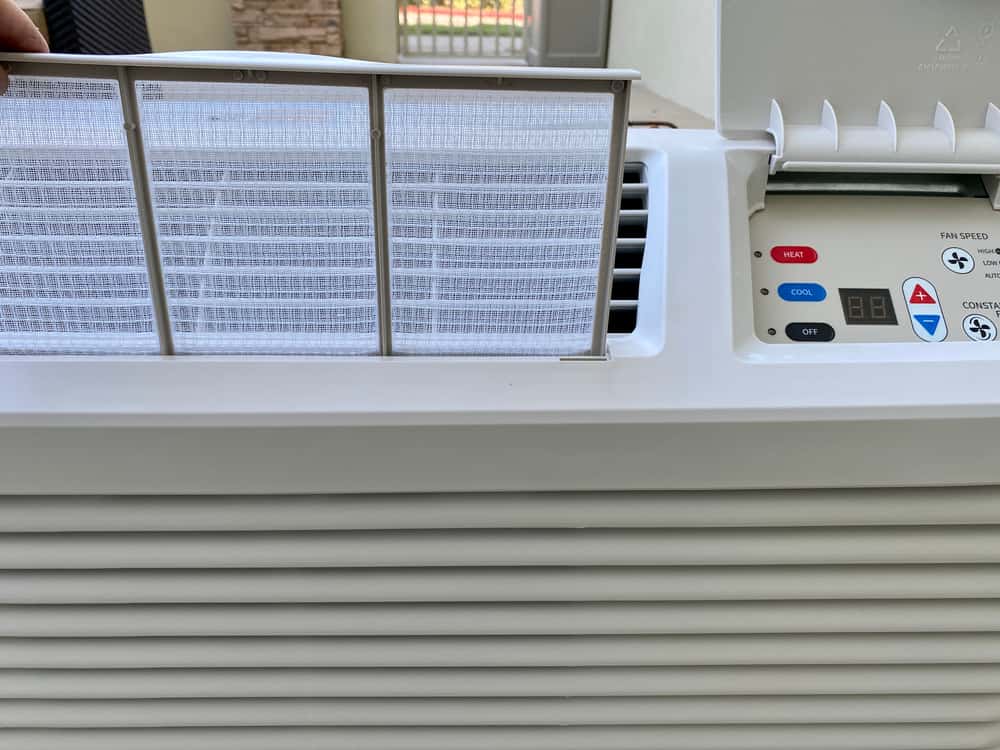
Next, look at your air filter. A clogged filter is the number one reason PTAC units stop working effectively. When dust, pet hair, and debris pack into that filter, your unit can’t pull in enough air to cool or heat properly. Pull it out and hold it up to the light—if you can’t see through it clearly, it’s restricting airflow and making your unit work harder while delivering less comfort.
How to Check and Clean Your PTAC Air Filter
Your PTAC air filter sits behind the front grille, usually accessible without tools. Pop off the grille cover and slide the filter out. Most PTAC units use reusable mesh filters, which means you can clean them instead of replacing them.
Take the filter to your sink and rinse it with warm water. If it’s really dirty, use a little mild dish soap to break up the grime. Let the water run through it until it’s clear. Don’t skip the drying step—a wet filter going back into your unit can cause mold and other problems. Let it air dry completely, or use a clean towel to speed things up.
How often should you clean it? That depends on how much you use your PTAC and what’s in your air. If you have pets, live near a busy street, or run your unit constantly, check it monthly. For lighter use, every two to three months works. In Queens and NYC, where street dust and urban debris are constants, monthly checks make sense.
A clean filter does more than fix cooling problems. It also lowers your energy bills, extends the life of your unit, and improves your indoor air quality. It’s the easiest maintenance task that prevents the most problems.
While you have the grille off, take a look at the coils inside. If they’re covered in dust or grime, that’s another airflow problem. You can gently vacuum them or wipe them down with a damp cloth, but be careful—those fins bend easily. If the coils look frozen or covered in ice, that’s a different issue we’ll cover next.
What to Do When Your PTAC Has Ice Buildup
Ice forming on your PTAC’s indoor coils means something’s wrong with airflow or refrigerant levels. When refrigerant gets too cold because not enough warm air is passing over the coils, condensation freezes. That ice blocks even more airflow, making the problem worse.
Turn off your unit immediately if you see ice. Let it thaw completely before you do anything else. Trying to scrape off the ice or keep running the unit will damage components and turn a fixable problem into an expensive one. Put a towel under the unit to catch the melt water.
Once it’s thawed, check that filter again. A clogged filter is the most common cause of frozen coils because it chokes off the airflow your system needs. Replace or clean it, then turn the unit back on and see if the problem returns.
If the filter was clean and the coils freeze again, you’re likely dealing with low refrigerant. Refrigerant doesn’t just run out on its own—if levels are low, there’s a leak somewhere in the system. That’s not a DIY fix. Refrigerant work requires EPA certification and specialized equipment, so you’ll need to call for professional PTAC repair.
Another cause of ice buildup is running your unit at extremely low temperature settings for extended periods, especially in very cold weather. PTACs aren’t designed to handle those extremes. Set your thermostat to a moderate, consistent temperature. If you’re in an NYC apartment and the outdoor temperature is near freezing, your PTAC might struggle to keep up, particularly if it’s an older unit.
Blocked vents and obstructed airflow can also cause freezing. Make sure furniture, curtains, or other items aren’t blocking the front or sides of your unit. Check the outside too—leaves, debris, or even pigeon nests can block the exterior vents and cause problems.
If you’ve addressed all of these and ice keeps forming, the issue is likely internal—a failing fan motor, a malfunctioning thermostat sensor, or a refrigerant leak. At that point, troubleshooting on your own won’t help. You need someone who can diagnose the root cause and fix it properly.
Troubleshooting PTAC Power and Electrical Issues
If your PTAC won’t turn on at all, the problem is usually power-related. These units draw significant electricity, especially when the compressor kicks on, and that can trip breakers or cause connection issues.
Start with your circuit breaker. Go to your electrical panel and look for a tripped breaker. It won’t be fully in the “off” position—it’ll be somewhere in the middle. Flip it all the way off, then back on to reset it. If it trips again immediately, you have a short or an overloaded circuit that needs professional attention.
Check that your PTAC is actually plugged in securely. Some units use standard 220-volt plugs that can work loose over time from vibration. Push the plug firmly into the outlet and make sure the connection is solid. If your unit is hardwired, verify that the disconnect switch near the unit is in the “on” position.
How to Reset Your PTAC Controls and Thermostat
Sometimes your PTAC just needs a reset to clear a minor software glitch or error code. Modern PTAC units have control boards that can store fault codes, and a reset often clears them and gets your unit running again.
To perform a basic reset, turn off your unit using the controls, then unplug it or flip the breaker. Wait at least five minutes—this gives the system time to fully discharge. Plug it back in or flip the breaker, then turn the unit back on. This simple reset fixes more problems than you’d expect, especially after a power outage or if the unit has been acting erratic.
Many PTAC units also have a self-diagnostic mode that displays error codes. For most Amana PTACs, you can access this by holding down the up and down arrow buttons simultaneously, then pressing the “cool” button twice. The unit will run a diagnostic test and display a code that tells you what’s wrong. Check your owner’s manual for what each code means—some are simple fixes, while others indicate you need professional help.
Thermostat problems cause a lot of confusion. If your unit runs constantly without reaching the set temperature, or shuts off before the room is comfortable, the thermostat might be miscalibrated. Make sure nothing is blocking the thermostat sensor, which is usually located near the air intake. Heat sources like lamps or direct sunlight can throw off the reading and make your PTAC think the room is warmer or cooler than it actually is.
If you have a remote control for your PTAC, try replacing the batteries. A weak battery signal can prevent the unit from responding to commands, making it seem like the unit itself is broken when it’s really just the remote.
Check that you’re in the right mode. It’s easy to accidentally leave the unit in “fan only” mode, which blows air without actually cooling or heating. Make sure you’re set to “cool” or “heat” and that your temperature setting makes sense—below room temperature for cooling, above room temperature for heating.
Loose electrical connections inside the unit can cause intermittent problems where the PTAC works sometimes but not others. These connections can work loose over time from vibration and temperature changes. Unless you’re comfortable working with electrical systems, don’t attempt to tighten these yourself. One wrong move can turn a moderate repair into a major safety hazard.
Diagnosing Blower Motor and Fan Problems
When your PTAC’s fan isn’t blowing air—or it’s blowing weakly—you’re dealing with a blower motor or fan issue. The fan is what moves air across the coils and into your room, so when it’s not working, neither is your cooling or heating.
Listen to your unit. If you hear the compressor running (a humming or vibrating sound) but no air is coming out, the fan motor might have failed. Try this test: with the unit off and unplugged, reach in and gently spin the blower wheel by hand. If it’s stiff, grinds, or won’t spin freely, the motor bearings are likely failing or something is blocking the fan.
Check for physical obstructions. Debris, broken blades, or objects that fell into the unit can block the fan from spinning. Look for anything wedged in the blower housing. Never force a stuck wheel—you can warp the hub or damage your fingers on sharp metal edges.
A failing capacitor is one of the most common reasons a blower motor won’t start. The capacitor gives the motor the electrical boost it needs to get spinning. If your fan won’t start on its own but will run once you manually spin it, the capacitor is probably bad. Capacitors are inexpensive—often under $20—but replacing them involves working with live electricity. If you’re not experienced with electrical work, this is a job for a professional.
Weak airflow even when the fan is running usually means the filter is clogged, the coils are dirty, or the fan speed setting is wrong. Check your controls to make sure you’re not stuck on a low fan speed. Clean that filter and inspect the coils for dust buildup.
If the fan runs but makes loud grinding, squealing, or rattling noises, you’re hearing worn bearings or loose components. Grinding and squealing often mean the motor bearings are going bad and the motor will fail soon if not addressed. Rattling usually indicates loose screws, panels, or mounting brackets. Tightening those can often eliminate the noise, but if the motor itself is making the sound, it needs attention from a technician.
Blower motor problems can also stem from control board failures or wiring issues. If you’ve checked everything visible and the fan still won’t work, the problem is likely internal and requires diagnostic equipment to pinpoint. At that point, continuing to troubleshoot on your own wastes time. A qualified PTAC technician can test voltage, check capacitance, and verify motor windings to find the exact problem.
When to Call for Professional PTAC Repair in Queens
You’ve checked the filter, reset the unit, verified the power, and the problem persists. That’s when you stop troubleshooting and call for help. Some PTAC problems need professional equipment, expertise, and certifications to fix safely and correctly.
Refrigerant issues, compressor failures, electrical faults, and control board problems aren’t DIY territory. Attempting those repairs yourself can damage your unit further, void warranties, and create safety hazards. The money you think you’re saving by avoiding a service call often turns into a much bigger bill when the problem gets worse.
If your PTAC is making burning smells, showing visible smoke, or repeatedly tripping breakers, turn it off immediately and call a technician. Those are signs of serious electrical problems that can cause fires. Similarly, if you see water leaking inside your space, don’t ignore it—water damage to walls and floors gets expensive fast, and moisture creates mold problems that affect your health.
The good news is that many PTAC repairs are straightforward for experienced technicians. What seems like a major failure to you might be a quick fix for someone who works on these units every day. In Queens and NYC, where PTAC units are everywhere, finding qualified help isn’t hard—but finding someone who’s transparent about pricing, shows up when they say they will, and fixes it right the first time makes all the difference. That’s where we come in. With over 50 years in the NYC PTAC market, we’ve seen every problem these units can throw at you, and we know how to fix them efficiently.