Summary:
PTAC Repair vs Replacement: When Professional Service Saves Thousands
Most Queens property owners face this dilemma when their PTAC starts acting up. The unit’s struggling, energy bills are climbing, but you’re not sure if repair makes sense or if it’s time to replace the whole system.
Here’s the reality: what seems like a major problem often has a straightforward solution when you work with PTAC specialists. A clogged filter can raise your cooling costs by 15%. Dirty coils force your compressor to work overtime. Low refrigerant levels make your system strain just to maintain basic comfort.
The key is catching these issues before they cascade into bigger problems. When you ignore early warning signs like weak cooling or unusual cycling, you’re putting extra stress on expensive components like the compressor. What could have been a $300 repair for a faulty thermostat becomes a $3,000+ replacement job.
Common PTAC Problems Queens Homeowners Face
Queens PTAC units deal with conditions that most other cities don’t face. The combination of extreme weather, urban air quality, and aging building infrastructure creates specific problems that generic HVAC companies don’t always understand.
Temperature control issues top the list. Your unit might struggle to maintain consistent temperatures, cycling on and off frequently, or failing to reach your set temperature entirely. These symptoms often point to refrigerant problems, dirty coils, or thermostat malfunctions—all fixable with the right expertise.
Strange noises are another red flag. That grinding, squealing, or rattling sound isn’t something to ignore. It usually indicates worn bearings, loose components, or debris in the fan assembly. Left unchecked, these mechanical issues can damage other parts of your system.
Water leaks around your PTAC unit signal drainage problems. NYC’s notorious dust and debris can clog condensation drains, causing water to back up and potentially damage your walls or flooring. Professional cleaning and drain maintenance prevent these issues from escalating.
Poor airflow is especially problematic in Queens’ dense housing situations. When your PTAC can’t circulate air properly, it works harder to cool or heat your space, driving up energy costs while delivering poor comfort. Filters, coils, and fan components all play a role in maintaining proper airflow.
Energy bill spikes often accompany these problems. When your system operates inefficiently, it burns money 24/7. Queens County residents already pay about $385 monthly for electricity—38% above the national average. An inefficient PTAC can add another $500 to $800 yearly to that total.
The True Cost of Delaying PTAC Repair in Queens
Emergency PTAC repair in Queens costs 2-3 times normal pricing. When your unit fails during a heat wave or cold snap, you’re at the mercy of emergency service rates, plus the pressure to approve expensive repairs just to get comfortable again.
The timing is never convenient. Your PTAC doesn’t care that it’s a weekend or holiday. Emergency calls during peak seasons mean you’re paying premium rates when you can least afford it. Regular maintenance prevents most emergency situations, but once you’re in crisis mode, your negotiating power disappears.
Component failure creates a domino effect. The compressor is often the toughest part of your PTAC unit and should last the full lifespan unless damaged by poor maintenance. But when you ignore early warning signs, you’re putting extra stress on this expensive component. If the compressor fails, you’re looking at a repair that costs as much as a new unit.
Property value implications matter too. For property managers and landlords, one broken PTAC unit can generate multiple negative reviews, affecting bookings or tenant satisfaction for months. In residential properties, word spreads fast about maintenance issues. Lost revenue from vacant units, increased marketing costs to attract new tenants, and reputation damage from being known as the building with climate control problems—these costs dwarf the price of proper PTAC maintenance.
Parts availability becomes problematic with older units. When manufacturers discontinue models, parts prices skyrocket and availability becomes unpredictable. What starts as a reasonable repair quote can balloon when specialized components become scarce.
The math gets ugly fast when you consider the cumulative effect. Studies from the U.S. Department of Energy show that something as simple as a clogged filter can raise cooling costs by 15 percent. That’s money literally disappearing from your budget every month. But the real damage happens when you ignore the warning signs completely.
How Professional PTAC Service Cuts Your Energy Bills
Your energy bill arrives every month like clockwork, and if you’re like most Queens residents, you’re paying 51% more than the national average—about $385 monthly just for electricity. What if your PTAC unit, the very system meant to keep you comfortable, is the biggest culprit behind those sky-high costs?
Professional PTAC repair isn’t just about fixing what’s broken—it’s about optimizing your system for maximum efficiency and minimum waste. Studies show that poorly maintained PTAC systems can waste up to 26% more energy than properly serviced units. A comprehensive cleaning and tune-up typically improves efficiency by 15-25%, translating to immediate savings on your next utility bill.
The efficiency improvements from professional service typically pay for themselves within just a few billing cycles, then continue saving you money for years to come.
What Happens Inside a Neglected PTAC Unit
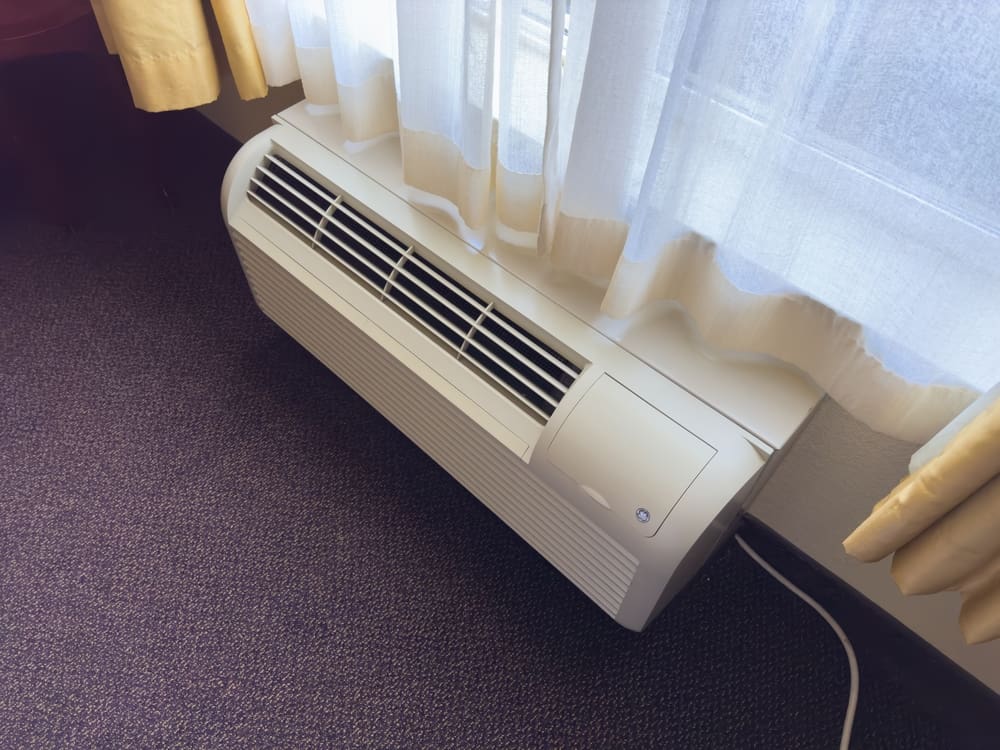
PTAC units in Queens face unique challenges that most other cities don’t deal with. Unlike other major cities, NYC relies heavily on these through-wall units as the standard heating and cooling method. The problem is that most of these units operate with fundamental issues that cost you money every single day.
Here’s what happens inside a neglected PTAC unit: filters clog with NYC’s notorious dust and debris, forcing the system to work harder to push air through. Coils accumulate grime that acts like insulation, preventing proper heat transfer. Refrigerant levels drop, making your compressor strain to achieve the same cooling effect.
Each of these issues compounds the others, creating a cascade of inefficiency that shows up directly on your Con Edison bill. The metal construction of PTAC units creates a thermal bridge—essentially a highway for heat transfer. In winter, your expensive heated air escapes through the metal components, while cold air sneaks in. During summer, the reverse happens, forcing your system to work overtime just to maintain basic comfort.
This isn’t a minor inefficiency we’re talking about. When your PTAC unit isn’t running efficiently, it’s essentially burning money 24/7. Most property owners treat PTAC maintenance like dental checkups—they know it’s important, but they keep putting it off until something hurts. This approach costs you far more than just the eventual repair bill.
The combination of extreme weather, urban air quality, and aging building infrastructure creates unique problems that generic HVAC companies don’t always understand. Experience with Queens’ specific PTAC challenges matters enormously.
Choosing the Right PTAC Service Company in Queens
Not all PTAC service companies focus on energy efficiency, and this distinction can cost you hundreds of dollars annually in continued waste. The right service provider doesn’t just fix immediate problems—they optimize your entire system for long-term efficiency and cost savings.
Look for companies that offer comprehensive energy efficiency assessments as part of their standard service. This should include refrigerant pressure testing, electrical system analysis, airflow measurements, and control system optimization. Companies that focus only on fixing obvious problems often miss the subtle efficiency issues that drive up your energy costs.
Experience with Queens’ specific PTAC challenges matters enormously. You want technicians who understand how NYC’s unique conditions—from extreme weather swings to urban air quality issues—affect PTAC performance. Generic HVAC companies often miss these nuances.
Licensing and insurance provide essential protection. You’re trusting someone to work on expensive equipment in your home or building. Fully licensed and insured companies protect you from liability and ensure work meets local codes and standards.
Emergency availability becomes crucial when your system fails during extreme weather. Queens experiences temperature swings that can make PTAC failure more than just inconvenient—it can be dangerous. Companies offering 24/7 emergency service provide peace of mind when you need it most.
Manufacturer relationships indicate expertise and access to quality parts. Companies that partner with leading PTAC manufacturers like Ice Air, Islandaire, and Daikin typically offer better warranties, faster parts availability, and deeper technical knowledge.
Customer testimonials reveal real experiences with service quality, pricing transparency, and follow-up support. Look for specific examples of energy savings, problem resolution, and overall satisfaction rather than generic praise.
Professional PTAC Repair: Your Path to Lower Bills and Better Comfort
Your PTAC unit could be costing you hundreds extra each year in wasted energy, but proper repair and maintenance can cut your bills by up to 26%. Professional service pays for itself within a few billing cycles through improved efficiency, then continues saving you money for years to come.
Don’t let a neglected PTAC unit continue draining your budget when the solution is just a phone call away. The longer you wait, the more expensive the eventual repair becomes—and the more money you waste on inflated energy bills every month.
For reliable, efficiency-focused PTAC service in Queens, contact us at Lion-Air Enterprises . With over 50 years of specialized PTAC expertise and 24/7 emergency availability, we’ve helped thousands of Queens property owners reduce energy costs while improving comfort and system reliability.