Summary:
When Your Energy Bills Start Climbing in Queens
Your Con Ed bill shouldn’t be a monthly shock, but dirty AC systems in Queens can drive energy costs through the roof without warning. When your unit works harder to push air through clogged filters and dirty coils, you’re essentially paying premium prices for subpar cooling.
Most Queens residents don’t realize their AC system is wasting energy until they see the damage on their utility statement. A clean system runs efficiently and keeps your costs predictable, while a neglected one can increase energy consumption by up to 40%.
How Dirty Coils Force Your System to Work Overtime
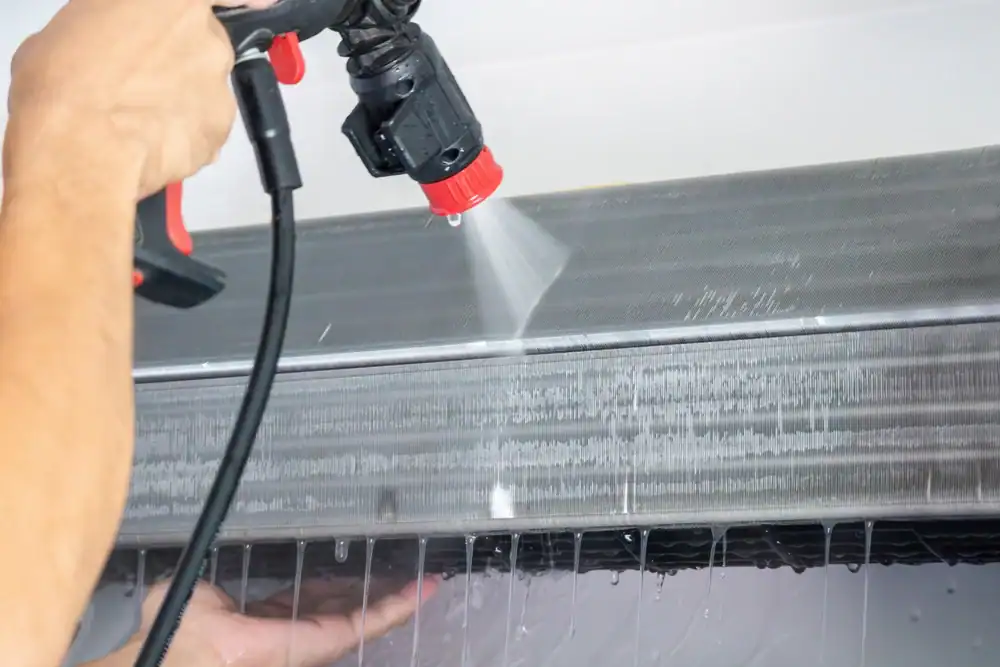
In Queens’ dusty urban environment, your AC coils collect grime faster than you might expect. These coils are responsible for heat transfer—the core function that actually cools your space. When they’re coated with dust, pollen, and urban particles, they can’t do their job effectively.
Think of dirty coils like insulation wrapped around the wrong parts of your system. Instead of keeping heat out, they trap it in, forcing your compressor to run longer cycles to achieve the same cooling effect. This extra work translates directly into higher energy bills and puts unnecessary strain on expensive components.
The problem compounds in Queens because of the constant circulation of street dust, construction particles, and seasonal pollen. What starts as a thin layer of debris becomes a thick barrier that can reduce your system’s efficiency by 30% or more. Regular professional cleaning removes this accumulated grime that simple filter changes can’t address.
Your system wasn’t designed to operate under these conditions long-term. When coils stay dirty, other components work harder to compensate, creating a cascade of inefficiency that shows up in both your monthly bills and the lifespan of your equipment.
Why Queens Air Quality Makes Professional Cleaning Essential
Queens air presents unique challenges that make DIY maintenance insufficient for most residential and commercial properties. The combination of traffic pollution, construction dust, and seasonal allergens creates a perfect storm of contaminants that standard filters can’t handle alone.
Unlike suburban areas with cleaner air, Queens properties deal with constant exposure to fine particles that penetrate deep into HVAC systems. These particles accumulate in places you can’t see or reach with basic maintenance tools. Over time, they create breeding grounds for mold and bacteria in the moisture-rich environment of your AC system.
Professional cleaning addresses contamination at the source, using specialized equipment to reach areas where problems actually develop. Steam cleaning and proper sanitization eliminate not just visible dirt, but the microscopic threats that impact both system performance and indoor air quality.
The wrong filter type can actually make air quality worse in Queens’ challenging environment. We understand which filtration systems work best for local conditions and can recommend solutions that protect both your health and your equipment investment.
Health Warning Signs Your AC System Is Making You Sick
Your AC system should improve your indoor environment, not compromise it. When cleaning gets neglected, your unit becomes a distribution system for allergens, mold spores, and bacteria throughout your living or working space.
If anyone in your household experiences unexplained respiratory issues, persistent allergies, or frequent headaches when spending time indoors, your AC system might be the culprit rather than the solution.
Black Mold Growth and What It Means for Your Family
Black mold in AC systems isn’t just unsightly—it’s a serious health threat that spreads every time your system runs. Mold thrives in the moisture-rich environment of evaporator coils and drain pans, especially when systems aren’t properly maintained.
Once mold establishes colonies in your HVAC system, spores become airborne with every cooling cycle. These spores circulate throughout your home or office, creating exposure risks for everyone in the space. Children, elderly residents, and anyone with respiratory conditions face the greatest danger from ongoing mold exposure.
You might notice mold growth around vents or on visible components, but the real problem often hides deep within the system where moisture collects. Professional cleaning addresses both visible mold and hidden colonies that DIY efforts can’t reach effectively.
The condensate pan—where moisture naturally collects during normal operation—becomes a breeding ground when drainage isn’t properly maintained. Standing water provides the perfect environment for mold growth, and contaminated water can spread throughout the entire system if left unchecked.
Strange Odors That Signal Immediate Action Needed
Musty smells from your AC vents aren’t normal, and they typically indicate biological growth somewhere in your system. These odors intensify when your HVAC system runs because contaminated air gets pushed through your ductwork and into your living spaces.
Different odors signal different problems, but all of them indicate contamination that professional cleaning can address. A rotting smell often points to organic debris trapped in your system, while persistent mustiness usually means mold or mildew growth in moisture-prone areas.
The smell gets stronger over time because the underlying problem continues growing. What starts as a faint odor during startup can become overwhelming as biological contaminants multiply in the dark, moist environment of your HVAC system.
Ignoring these warning signs puts your health at risk and allows the problem to spread to areas that become increasingly difficult and expensive to remediate. Professional cleaning eliminates odor sources rather than just masking them, ensuring your indoor air quality actually improves rather than just temporarily seeming better.
Getting Professional AC Cleaning in Queens Before Problems Escalate
Recognizing these seven warning signs gives you the power to act before minor maintenance becomes major repair bills. Professional AC cleaning addresses root causes rather than temporary symptoms, protecting both your investment and your health.
Queens’ challenging environment makes regular professional maintenance essential rather than optional. When you partner with experienced local technicians who understand the unique demands of urban HVAC systems, you get solutions that actually work long-term.
Don’t wait for complete system failure or health problems to force your hand. Contact Lion-Air Enterprises today to schedule professional AC cleaning that keeps your system running efficiently and your indoor environment healthy year-round.